Chimney Inspection
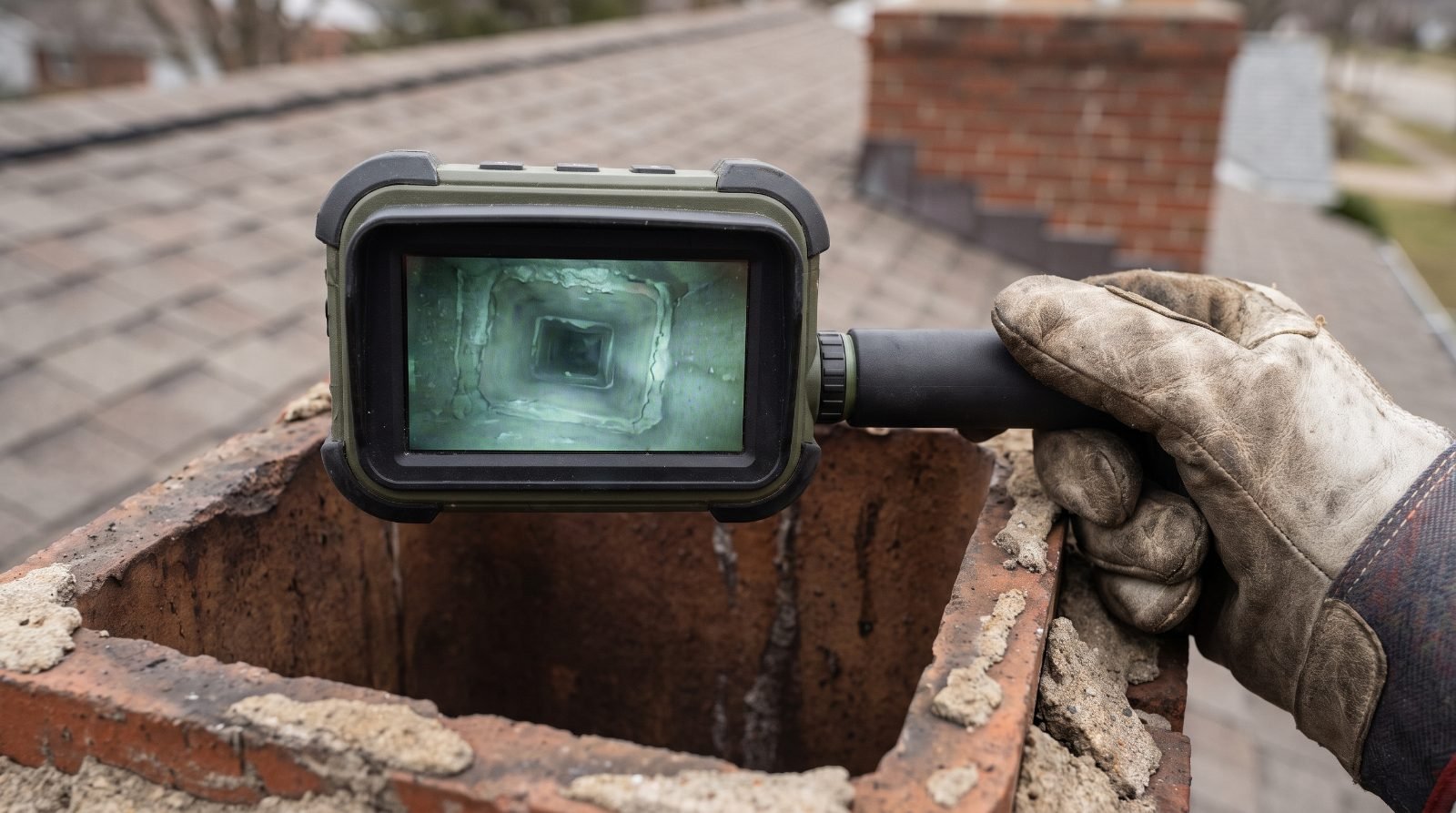
A camera down the flue, a look at the roof and the firebox, and a written report with photographs of everything we find.
Learn more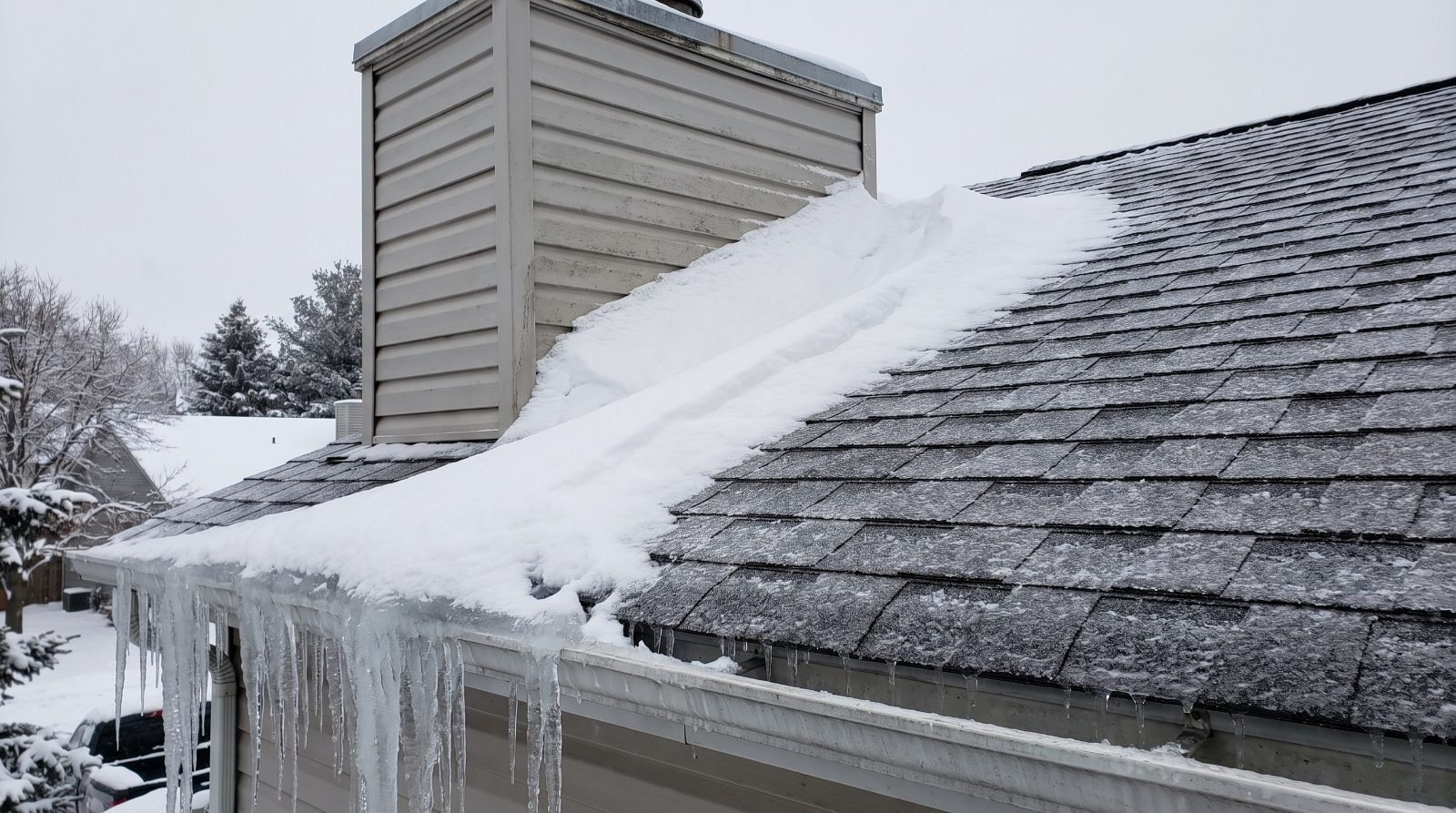
Service area
The county's new-build south and its hundred-year-old north need almost opposite work.
Butler County's southern end — Cranberry Township, Adams Township, Mars, Seven Fields — has been among the fastest-growing areas in western Pennsylvania for three decades, and it looks it. The great majority of homes there were built after 1995, and their fireplaces are factory-built units in framed chases rather than masonry chimneys.
Move twenty minutes north to Butler city, Zelienople, Harmony, Evans City or Saxonburg and you are back in 1900: solid brick and stone, borough housing built for coal, with the same crown, repointing and liner questions as the older parts of Allegheny County. Same county, opposite trade.
The wave of construction from roughly 1995 to 2010 in Cranberry and Adams put a lot of galvanised sheet-metal chase covers on a lot of roofs at the same time, which means they are now all reaching the end of their service life at the same time. A flat galvanised cover holds a puddle after every rain; the puddle sits, the coating fails, and rust perforates it. The tell is a rust-coloured stain running down the siding of the chase below the top, and by the time you can see that from the driveway water has been getting into the chase for a while. Replacement is a stainless cover with a cross-break peak and proper drip edges, and it is a two-hour job that prevents a framing repair.
Butler County sits higher and further north than the city and reliably picks up more snow, and holds it longer. That matters at the flashing line. Snow accumulates against the up-slope face of a chimney, meltwater backs up behind that dam, and the water is then pushed uphill under the shingles and over the top of the flashing — a route no flashing is designed to stop. If your chimney leaks during February thaws and never in a July downpour, the problem is likely ice rather than failed flashing, and the fix is attic insulation and ventilation, not new metal. We would rather tell you that than sell you flashing that will not work. On chimneys wider than about thirty inches across the slope, a properly built cricket also does a lot of the work here.
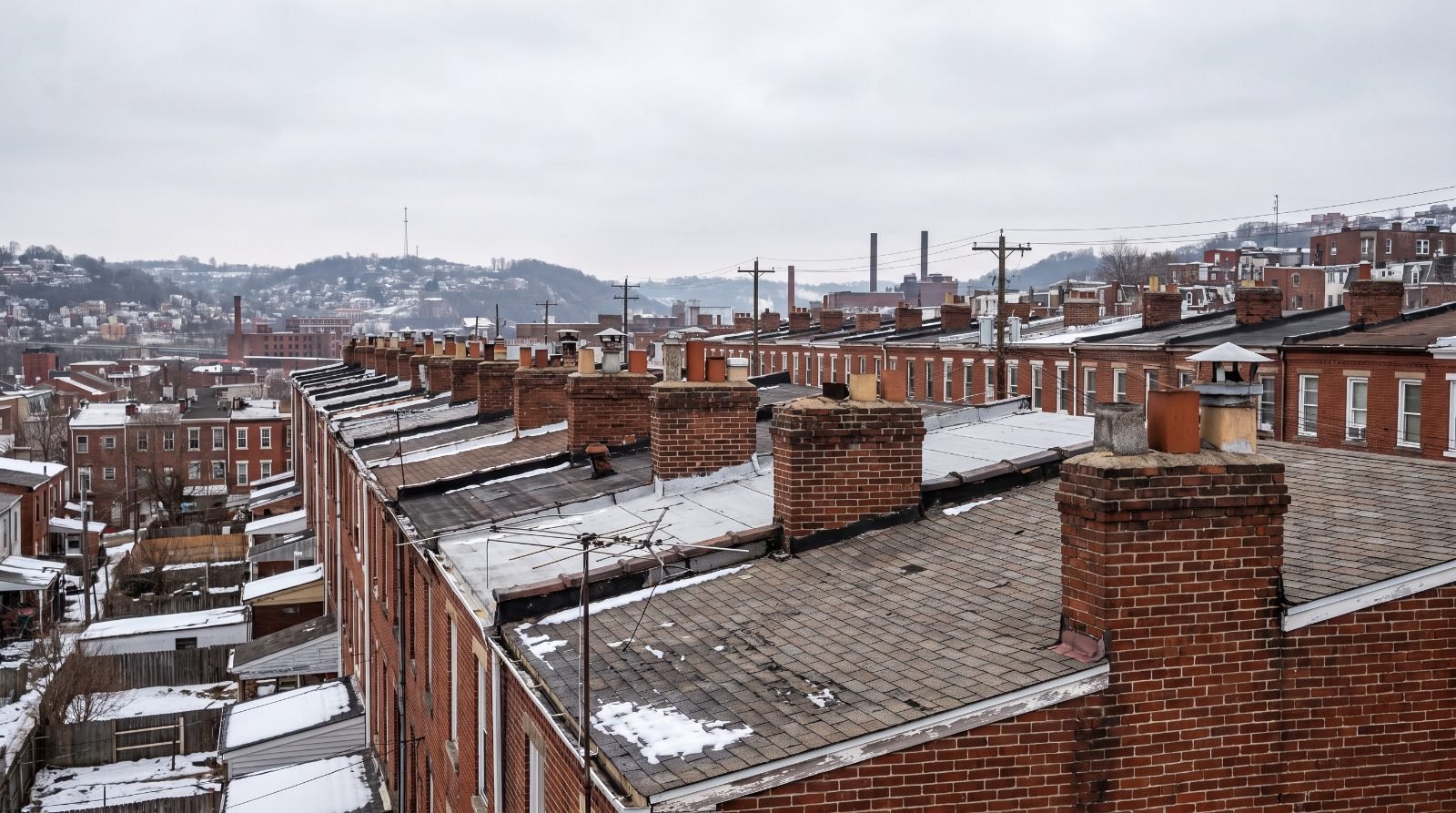
Butler, Zelienople, Harmony, Evans City, Saxonburg and Chicora have solid pre-war housing stock, much of it never significantly updated. Unlined or clay-lined flues, mortar-wash tops rather than cast crowns, and a lot of chimneys still carrying a modern gas furnace in a flue sized for a coal one. It is the same set of findings we see in the older Allegheny boroughs, and the work is masonry work — crown recasts, repointing, relining, capping.
Across the townships — Penn, Middlesex, Jefferson, Winfield — wood stoves and outdoor boilers are common as real heat, with the same heavy creosote picture as rural Westmoreland. If you burn daily through the winter, the sweep interval is annual and non-negotiable, and it is worth booking in late summer rather than discovering in November that everyone else had the same idea.
Not on the list? If you are within about 45 minutes of the city we almost certainly cover you — call and ask.
A camera down the flue, a look at the roof and the firebox, and a written report with photographs of everything we find.
Learn more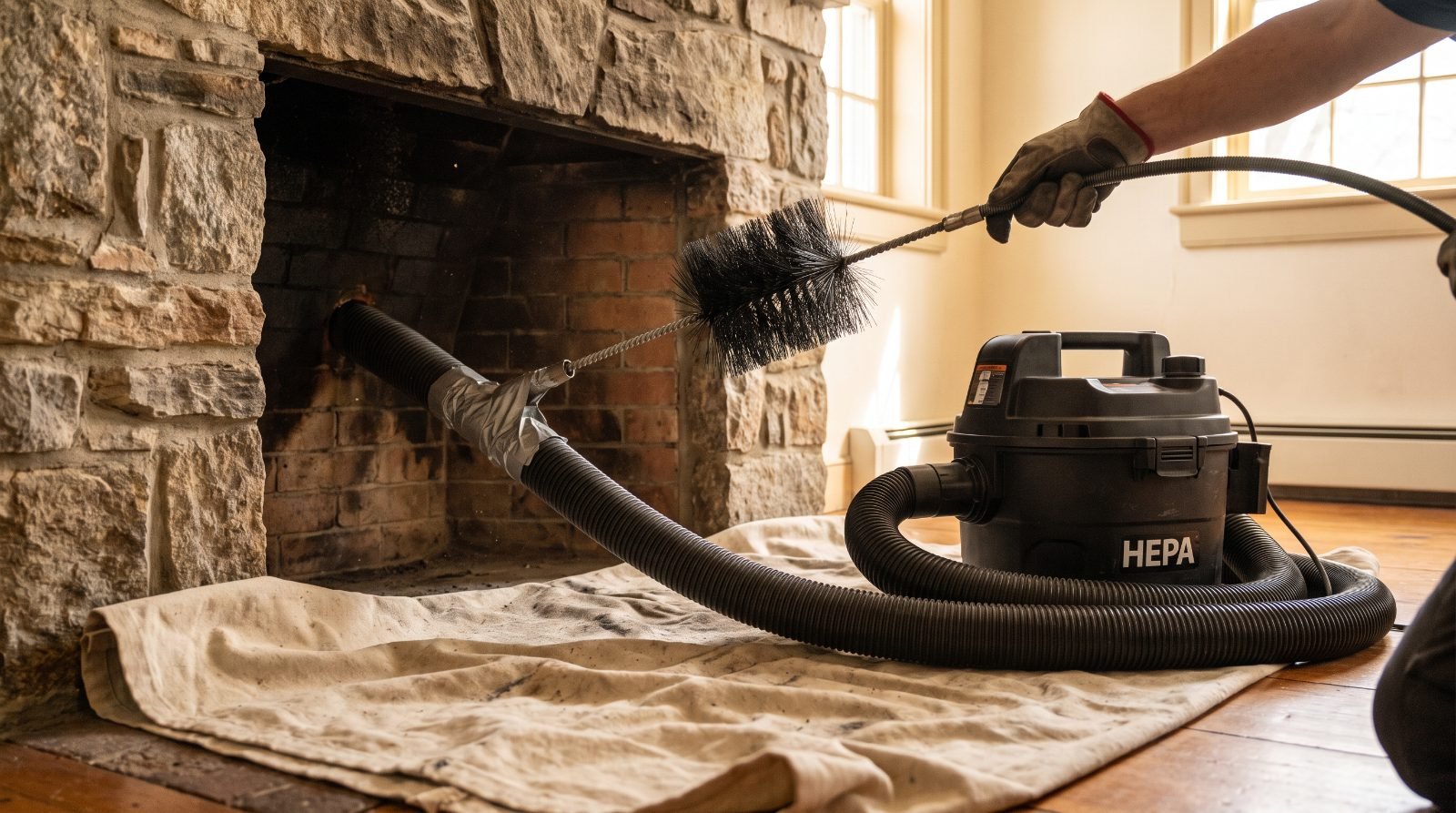
Creosote and soot out, with vacuum containment so nothing ends up on your floor. Before and after photographs of the flue.
Learn more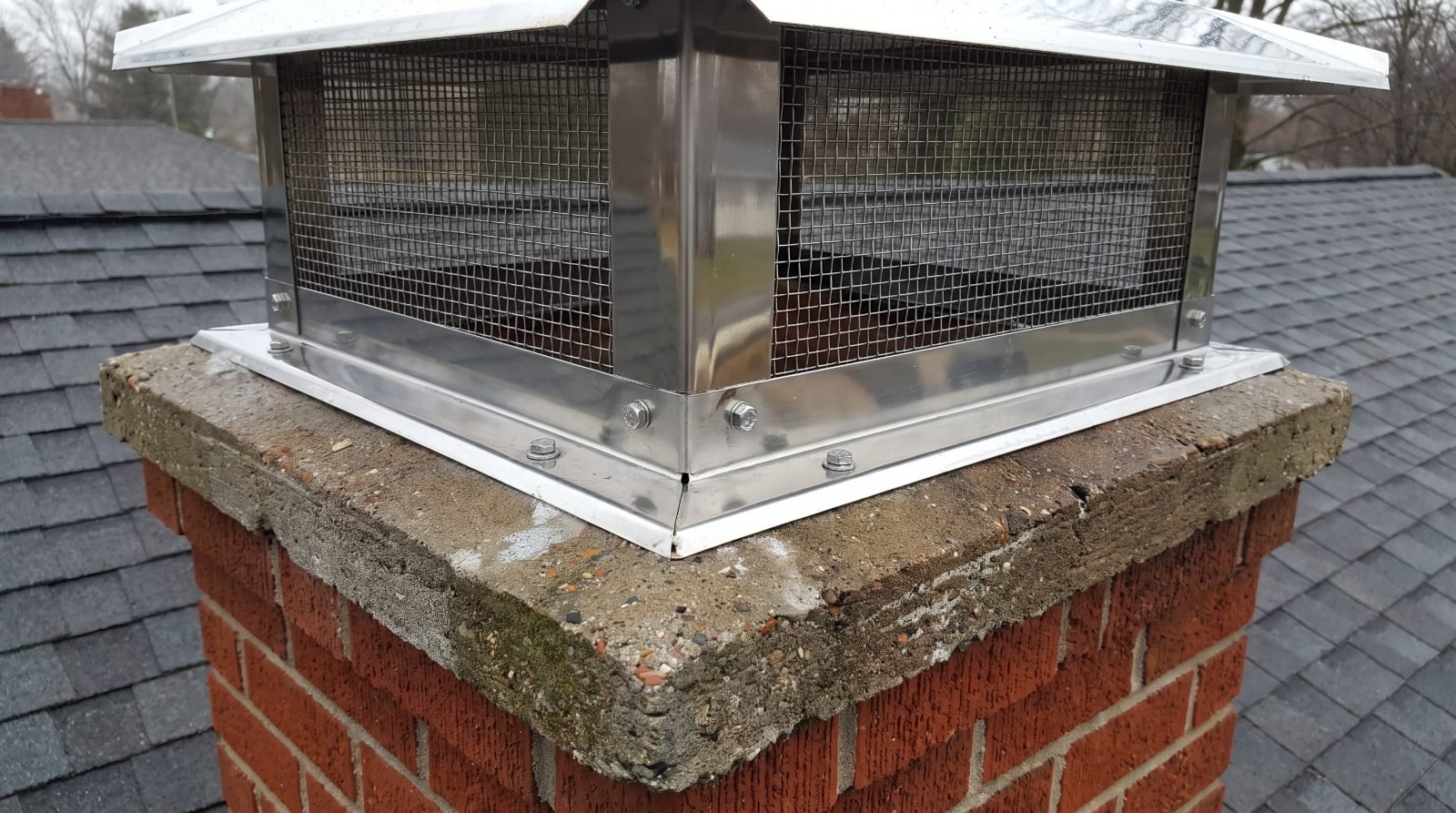
Stainless caps and custom multi-flue covers that keep rain, snow, birds and squirrels out of an open flue.
Learn more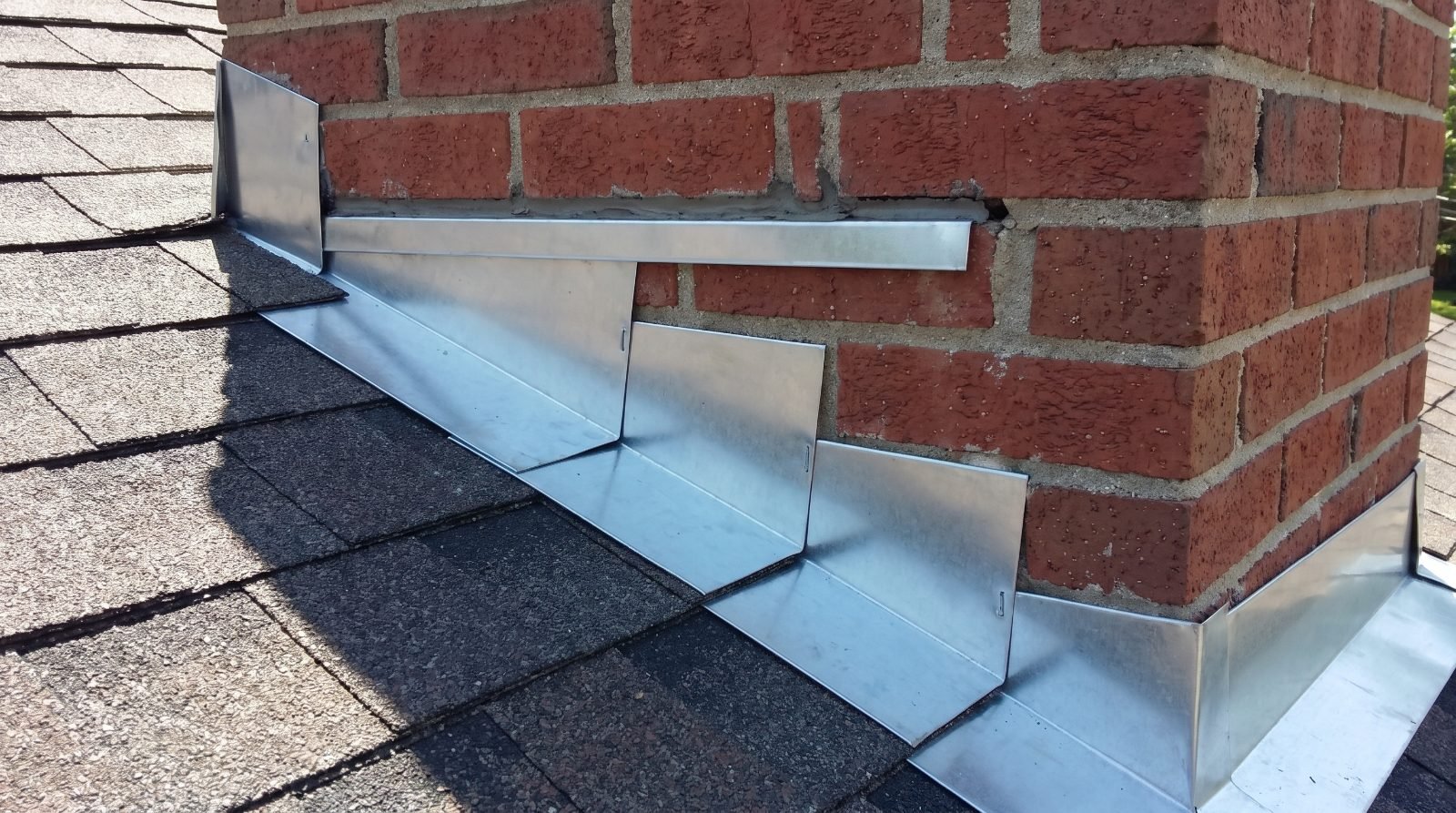
Stopping leaks where the chimney passes through the roof — with metal cut into the mortar joint, the way it is supposed to be done.
Learn more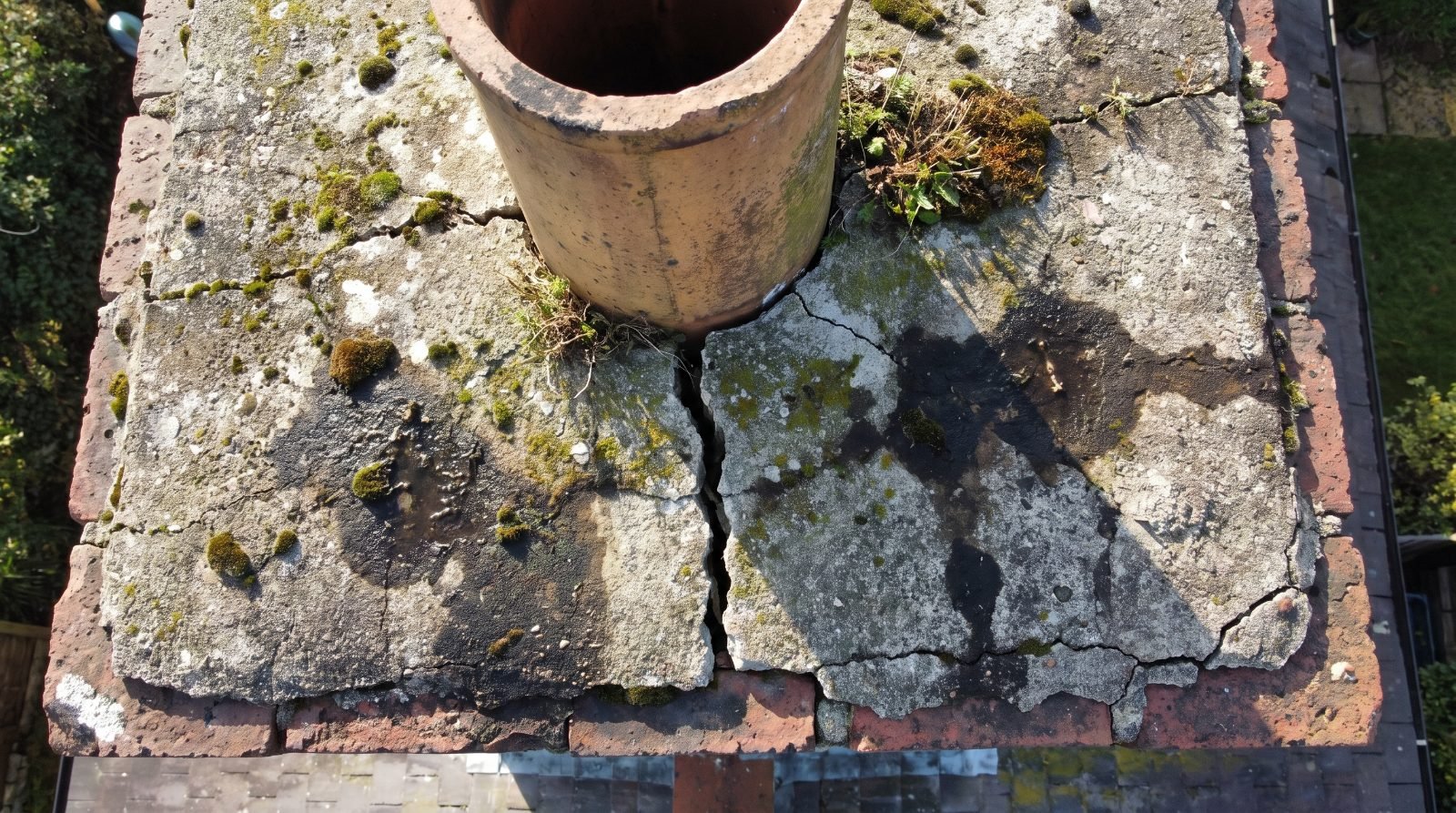
Repairing and recasting the concrete slab at the top of the chimney — the part that keeps water out of the masonry below it.
Learn moreAn inspection, and expect the chase cover and the firebox to be the two things discussed. At twenty-plus years the original galvanised cover is at or past its service life, and the factory-built firebox is at the age where the refractory panels are worth a look. Neither is necessarily urgent — but both are cheaper to find now than after a winter of water in the chase.
Yes, though scheduling up there tends to be batched with other jobs in the same week rather than same-day. It is the outer edge of our range, so we will be straight with you about timing when you call.
We sweep and inspect the flue, yes. We do not service the boiler itself — that is the manufacturer's dealer network, and the two jobs are usually best done in the same month.
Most people call us because of a smell, a stain on the ceiling, or a home inspector's note they don't understand. Tell us what you're seeing and we'll tell you what it usually means — before anyone books anything.