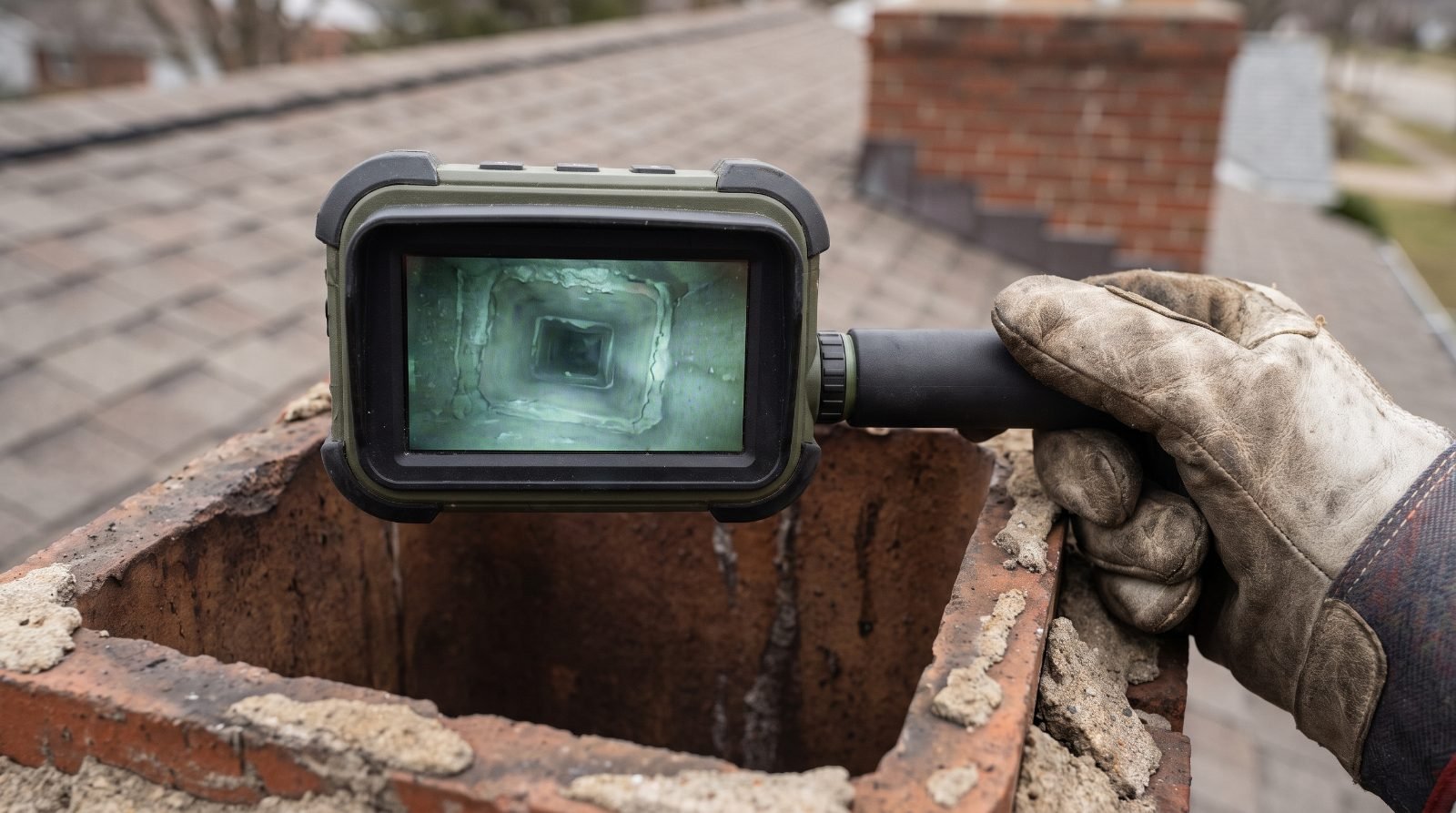
Chimney Inspection
A camera down the flue, a look at the roof and the firebox, and a written report with photographs of everything we find.
Learn more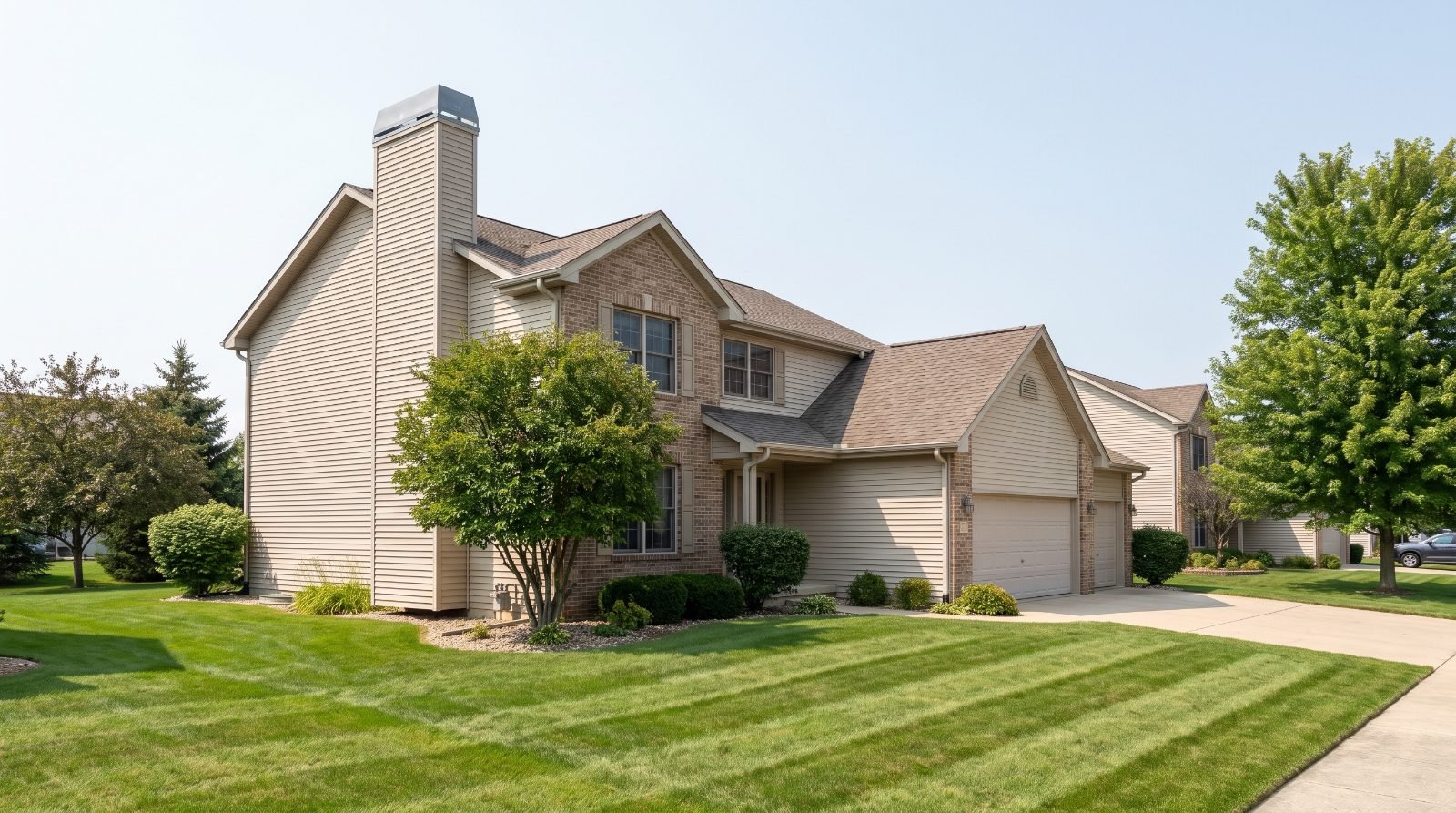
Service area
Nineteenth-century river-town brick at one end of the county and 1990s prefab fireplaces at the other.
Washington County is the sharpest split in our service area. The southern and eastern river towns — Charleroi, Monongahela, Donora, California — are nineteenth and early twentieth century, built during the coal and glass years, and much of that housing has never had significant work done to the chimneys. The northern band along the I-79 corridor — Peters Township, McMurray, North Strabane, parts of Canonsburg and Cecil — is one of the fastest-grown suburban areas in western Pennsylvania, and most of it went up after 1990.
Those two halves need different companies, effectively. We do both, but we do not pretend they are the same job.
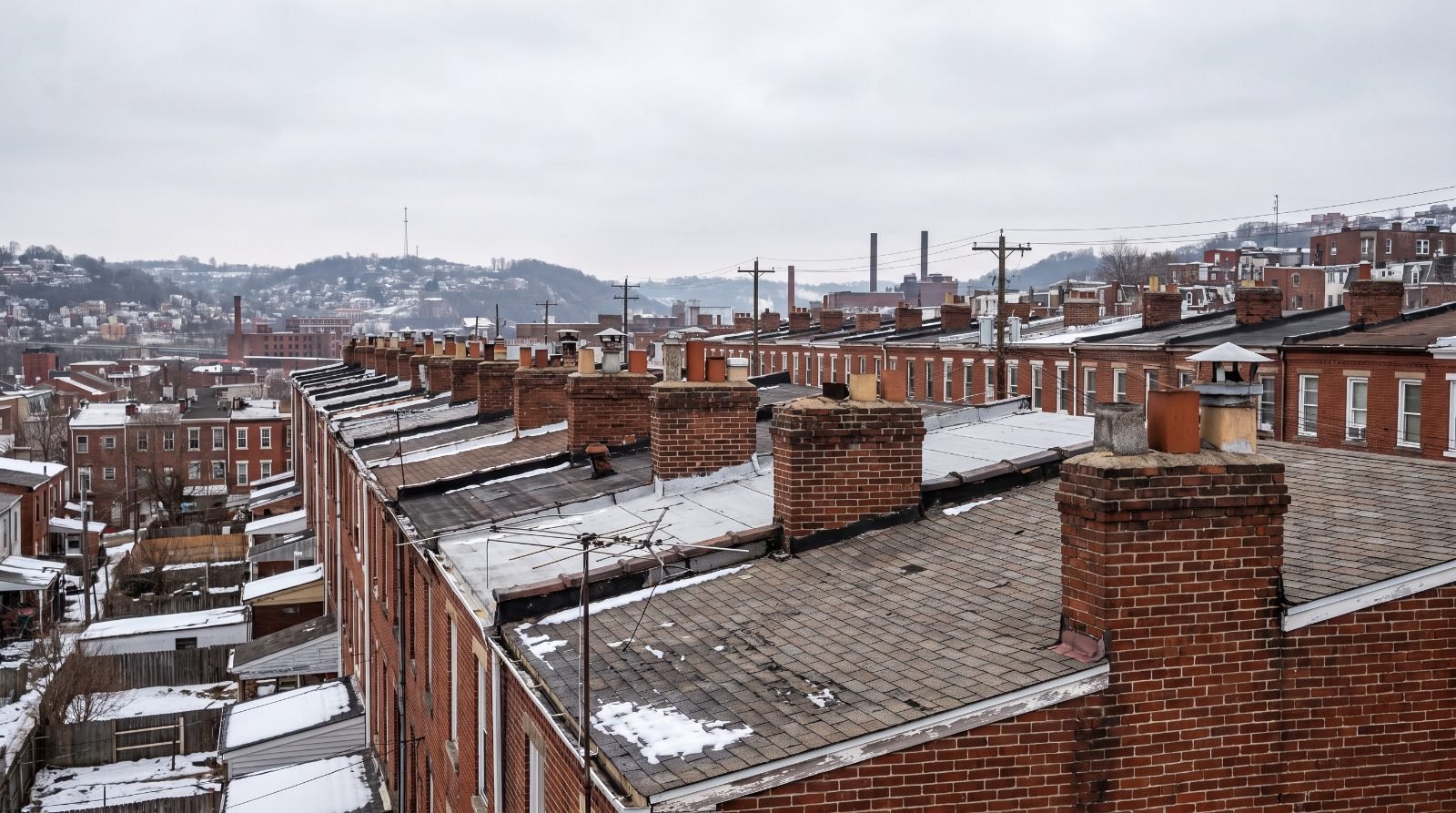
Charleroi, Monongahela and Donora have terrific nineteenth-century brick housing, and the single most damaging thing done to it is well-intentioned repointing with modern mortar. Historic brick was laid with lime-rich mortar that is deliberately softer than the brick, so when the wall moves the joint gives and the joint is what gets replaced. Repoint that wall with a hard Portland-based mix and the relationship inverts: the joint is now stronger than the brick, so the brick face takes the movement and pops off. Two or three winters later the wall looks worse than before the repair, and the damage is not reversible — you cannot put the face back on a brick. On anything pre-1930 we match the mix, and if you are getting quotes elsewhere, ask what mortar they intend to use. The answer is diagnostic.
Peters Township, McMurray, North Strabane and Cecil are dominated by post-1990 construction, and almost none of what looks like a chimney on those houses is masonry. It is a framed and sided chase enclosing a factory-built metal fireplace, with a sheet-metal lid on top called a chase cover. Those covers are typically galvanised steel, flat or nearly flat, and they hold standing water. They rust through somewhere between fifteen and twenty-five years, and a large slice of that housing stock is now exactly that age. Water coming in around the fireplace in a 2001 house in Peters is a rusted chase cover far more often than anything else, and the fix is a stainless replacement with a cross-break so water runs off. It is a sheet metal job, not a masonry one — anyone quoting you tuckpointing on a framed chase has not looked at your house.
This is worth saying plainly because it surprises people. A prefabricated zero-clearance fireplace is a manufactured appliance, not a permanent structure, and it has a lifespan of roughly twenty to thirty years. Firebox panels crack, the refractory degrades, the metal chimney sections corrode. Parts are model-specific and some manufacturers no longer exist. If your 1996 house still has its original firebox, an inspection is about whether that appliance is still safe to operate, and the honest answer is sometimes no. It is not an upsell — it is why these units carry model plates with listing information on them.
Parts of Washington County sit over historic deep-mine workings and areas of documented subsidence. Where a house has settled, chimneys show it early — they are heavy, rigid, and attached to a structure moving underneath them. A chimney visibly separating from the wall of the house, or a stack leaning off vertical, is not a chimney repair, it is a structural question, and we will tell you to get a structural engineer before we quote masonry on it. Repointing a chimney that is moving is money set on fire.
Not on the list? If you are within about 45 minutes of the city we almost certainly cover you — call and ask.
A camera down the flue, a look at the roof and the firebox, and a written report with photographs of everything we find.
Learn more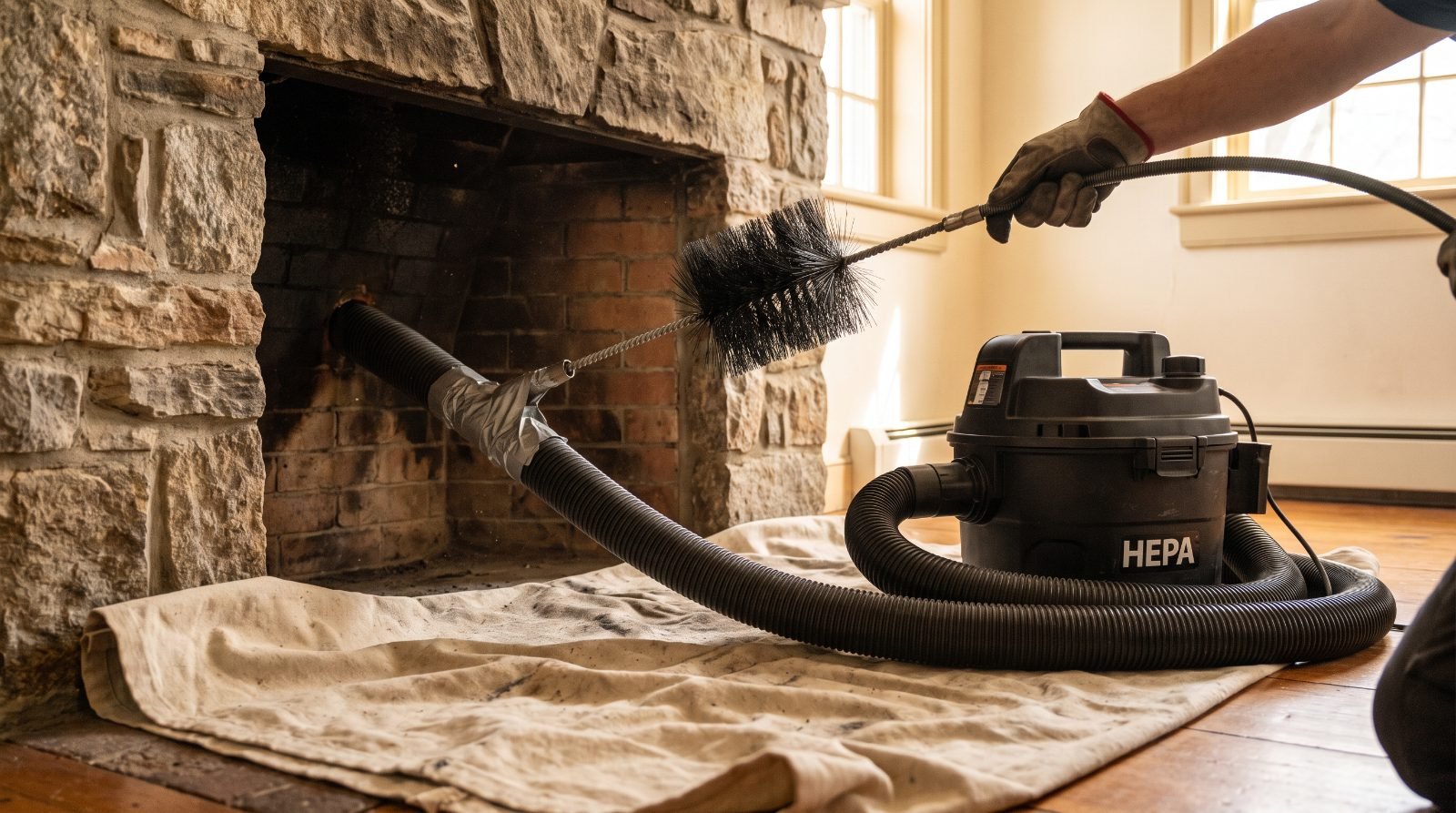
Creosote and soot out, with vacuum containment so nothing ends up on your floor. Before and after photographs of the flue.
Learn more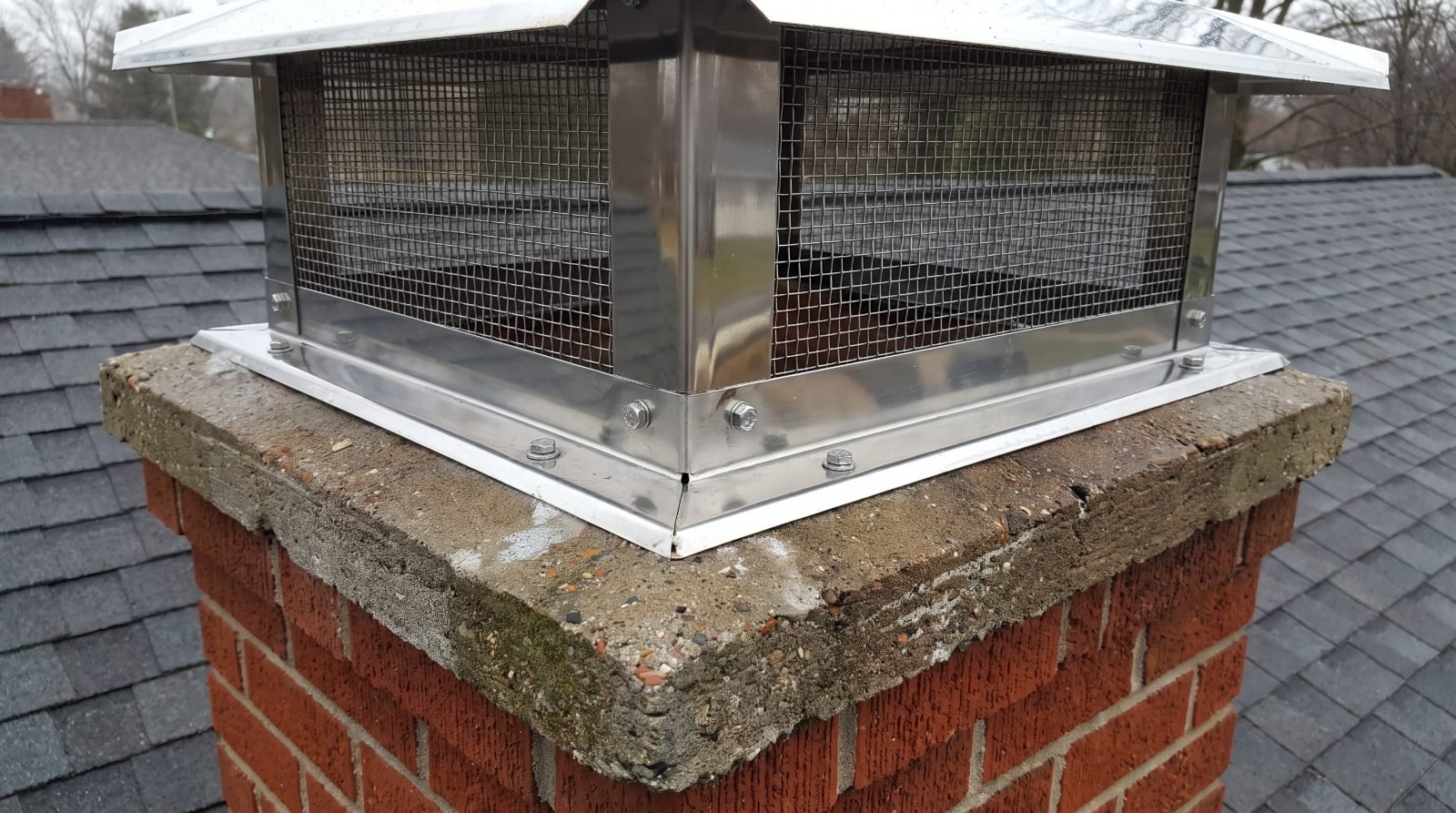
Stainless caps and custom multi-flue covers that keep rain, snow, birds and squirrels out of an open flue.
Learn more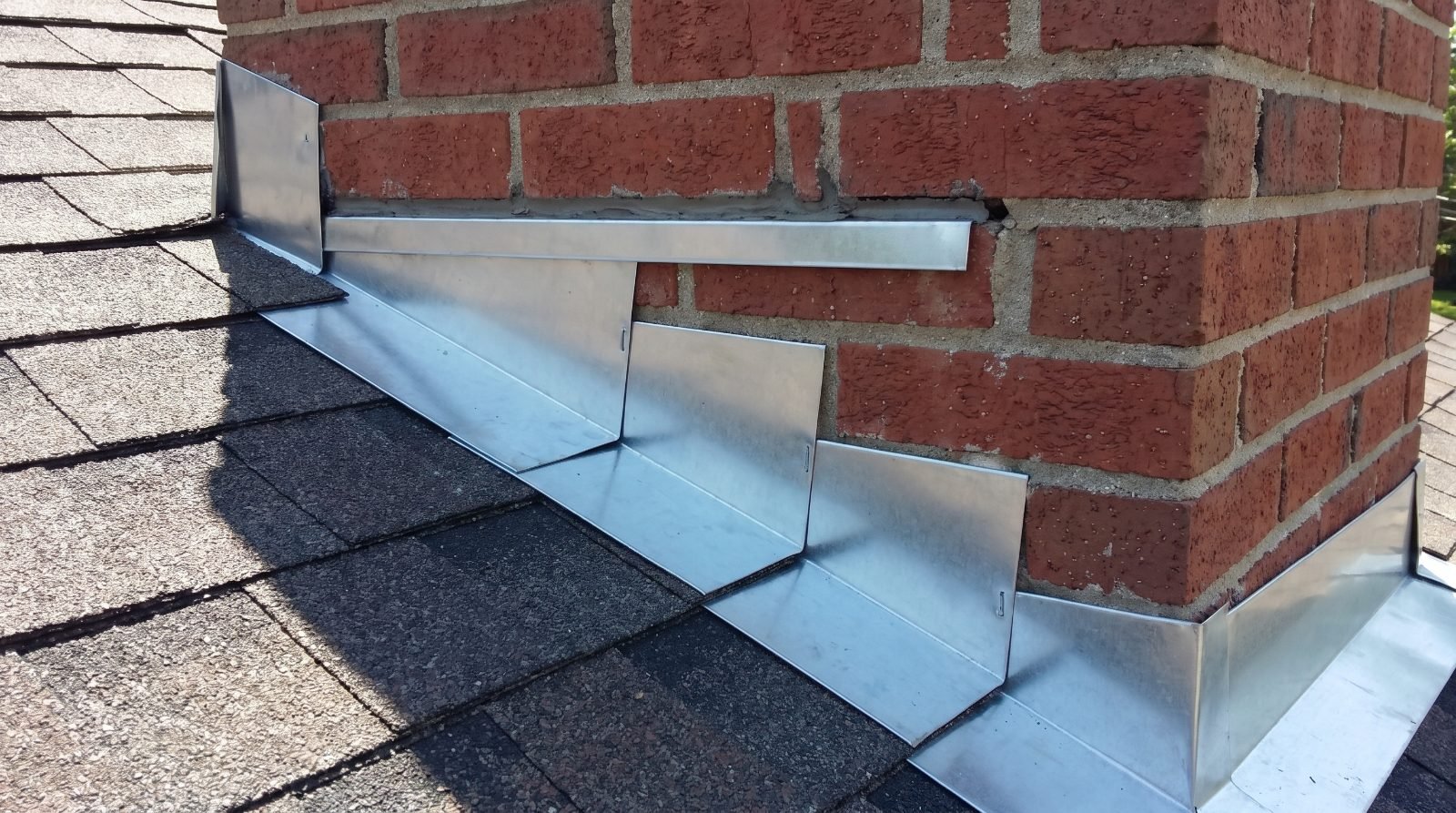
Stopping leaks where the chimney passes through the roof — with metal cut into the mortar joint, the way it is supposed to be done.
Learn more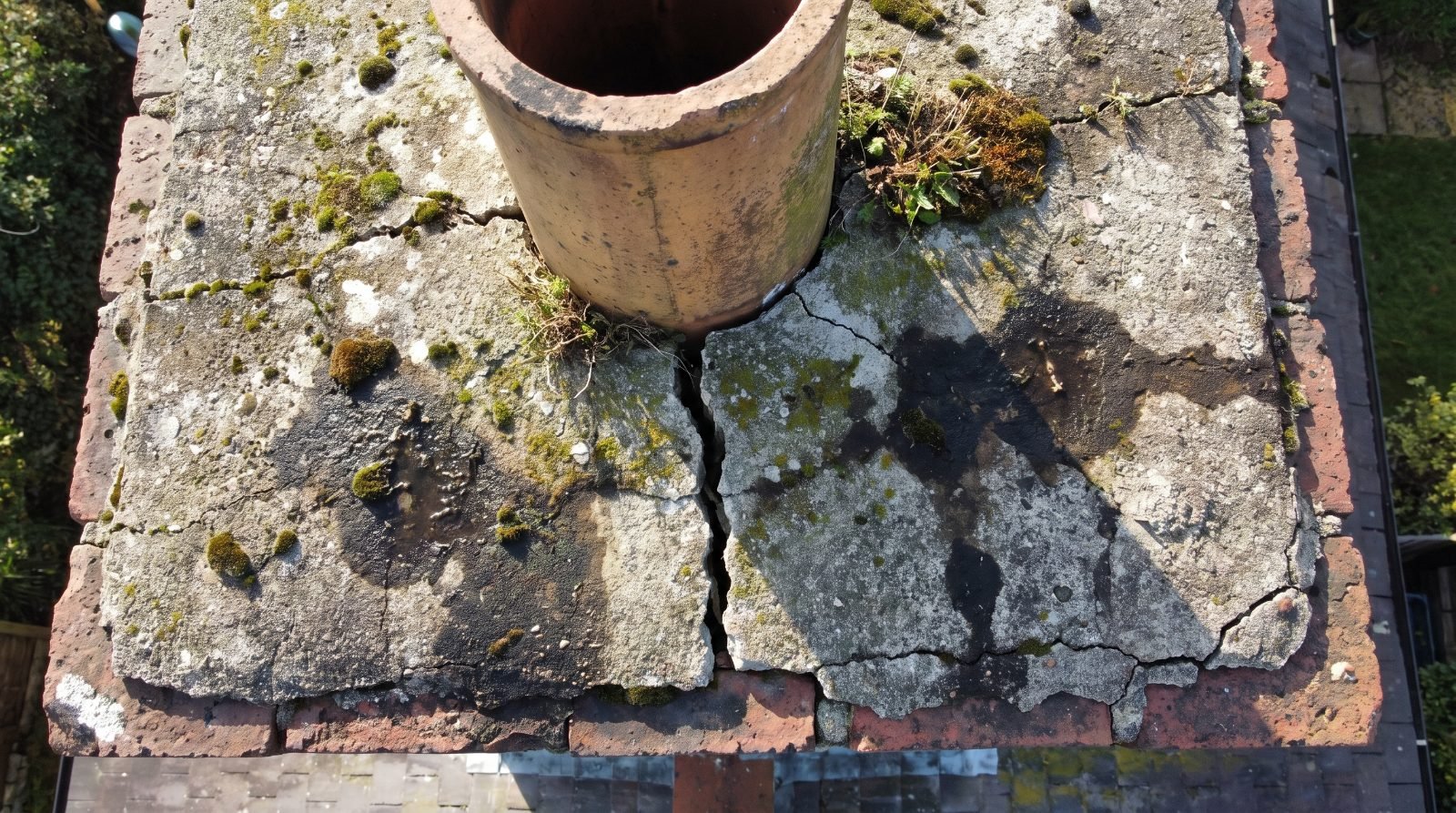
Repairing and recasting the concrete slab at the top of the chimney — the part that keeps water out of the masonry below it.
Learn moreKnock on it, or look at where it meets the ground. A masonry chimney is brick or stone all the way down and usually sits on its own footing. A chase is framed and clad — siding, or a brick veneer that stops at the foundation — and it usually has a flat metal top rather than a concrete crown. If the top is metal, it is a chase.
At that age the chase cover is the thing to look at, along with the condition of the firebox panels and the flashing where the chase meets the roof. A single inspection covers all three and tells you whether you are looking at a few hundred dollars now or nothing for another five years.
Most likely a hard Portland mortar in a soft-brick wall. What you are seeing is the brick faces spalling because the joints are no longer the sacrificial element. It can be halted by cutting out the hard mortar and repointing correctly, but it is slow, careful work and the brick that has already lost its face stays that way. Get someone to look before more of it goes.
Most people call us because of a smell, a stain on the ceiling, or a home inspector's note they don't understand. Tell us what you're seeing and we'll tell you what it usually means — before anyone books anything.