Chimney services · Pittsburgh, PA
Chimney crown repair
The most commonly failed part of a chimney, and the one nobody can see from the ground.
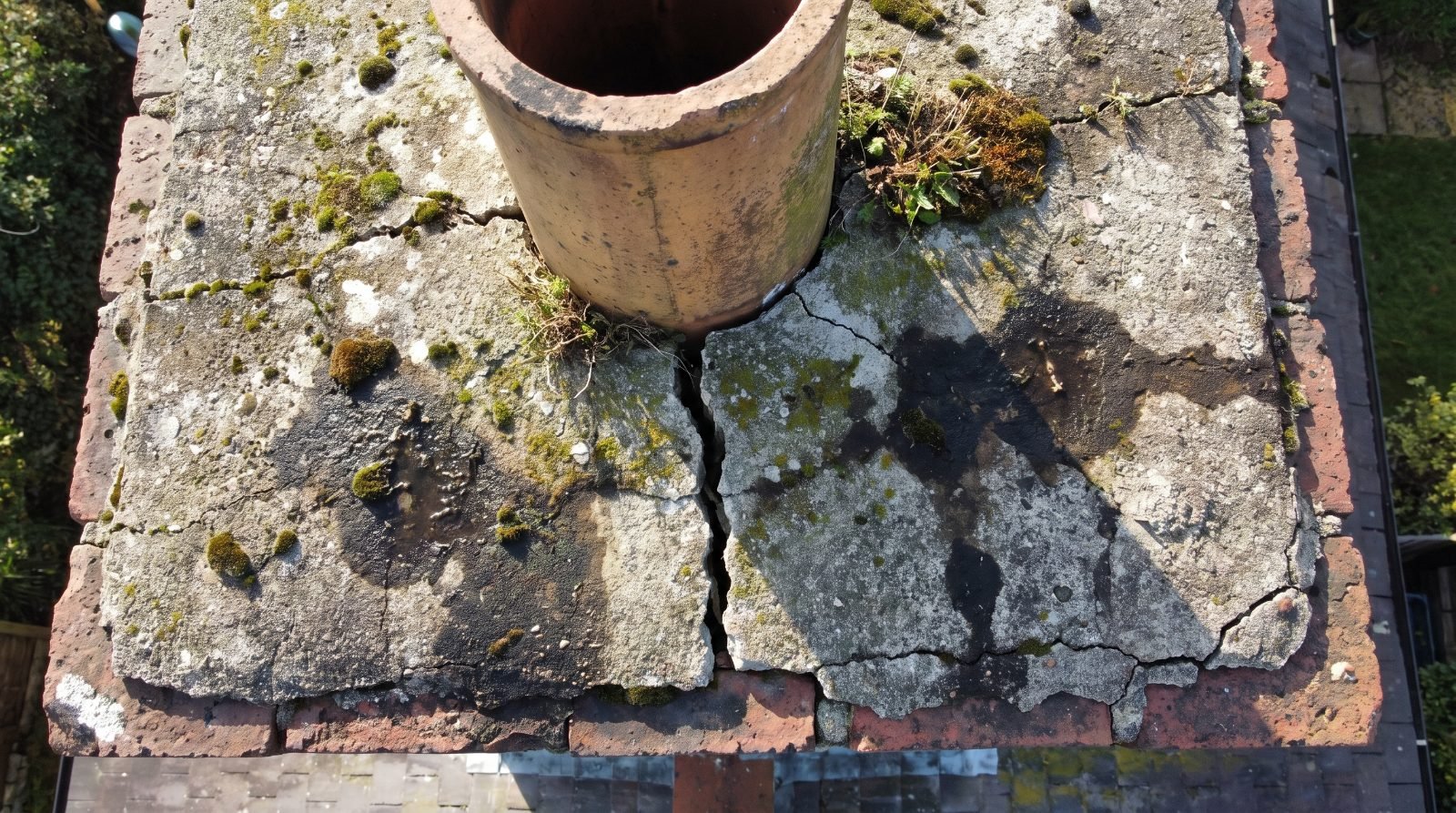
The crown is the sloped slab across the top of the chimney, around the flue tiles. Its job is to shed water away from the masonry and off the edge, and when it is doing that job the rest of the chimney stays dry.
When it cracks, water goes straight down into the body of the chimney — between the liner and the brick, into the mortar joints, into the brick itself. That water then freezes. This is the failure that causes most of the spalling brick faces you see on chimneys across this region, and the crown is almost always the original problem even when the visible damage is six feet lower down.
Why so many of them fail here
They were never built as crowns. On a great many older houses the top is a 'mortar wash' — a thin skim of the same mortar used to lay the brick, troweled over the top and shaped by hand. Mortar is not concrete, it has no reinforcement, and it is not designed to sit in the weather as a horizontal surface. It cracks. On pre-war Pittsburgh housing stock this is the norm rather than the exception.
No overhang. A proper crown extends past the face of the brick by two inches or more with a drip edge underneath, so water falls clear. A flush crown just delivers water straight onto the top course of brick.
No expansion joint. The flue tiles heat and expand at a different rate than the crown around them. Cast tight against the tile with no compressible joint, the crown cracks radially outward from the flue — the classic pattern.
Freeze-thaw. Then the region does the rest. Water in a hairline crack, dozens of freeze cycles a winter, and each cycle widens it. A crack you could not see three years ago is a quarter of an inch now.
The two repairs
Crown coat. A flexible elastomeric membrane troweled over a crown that is cracked but structurally sound. It bridges hairline and small cracks, stays flexible through thermal movement instead of cracking again, and buys the crown another ten to fifteen years. If the crown is basically intact this is the right answer and it is not expensive.
Recast. The failed crown comes off and a new one is cast in reinforced concrete, with a proper overhang, a drip edge and a compressible expansion joint around each flue tile. This is the permanent fix and it is what a badly cracked, spalled or partially missing crown needs. Coating a crown that has already broken up is money spent on postponing the same job.
What usually gets found at the same time
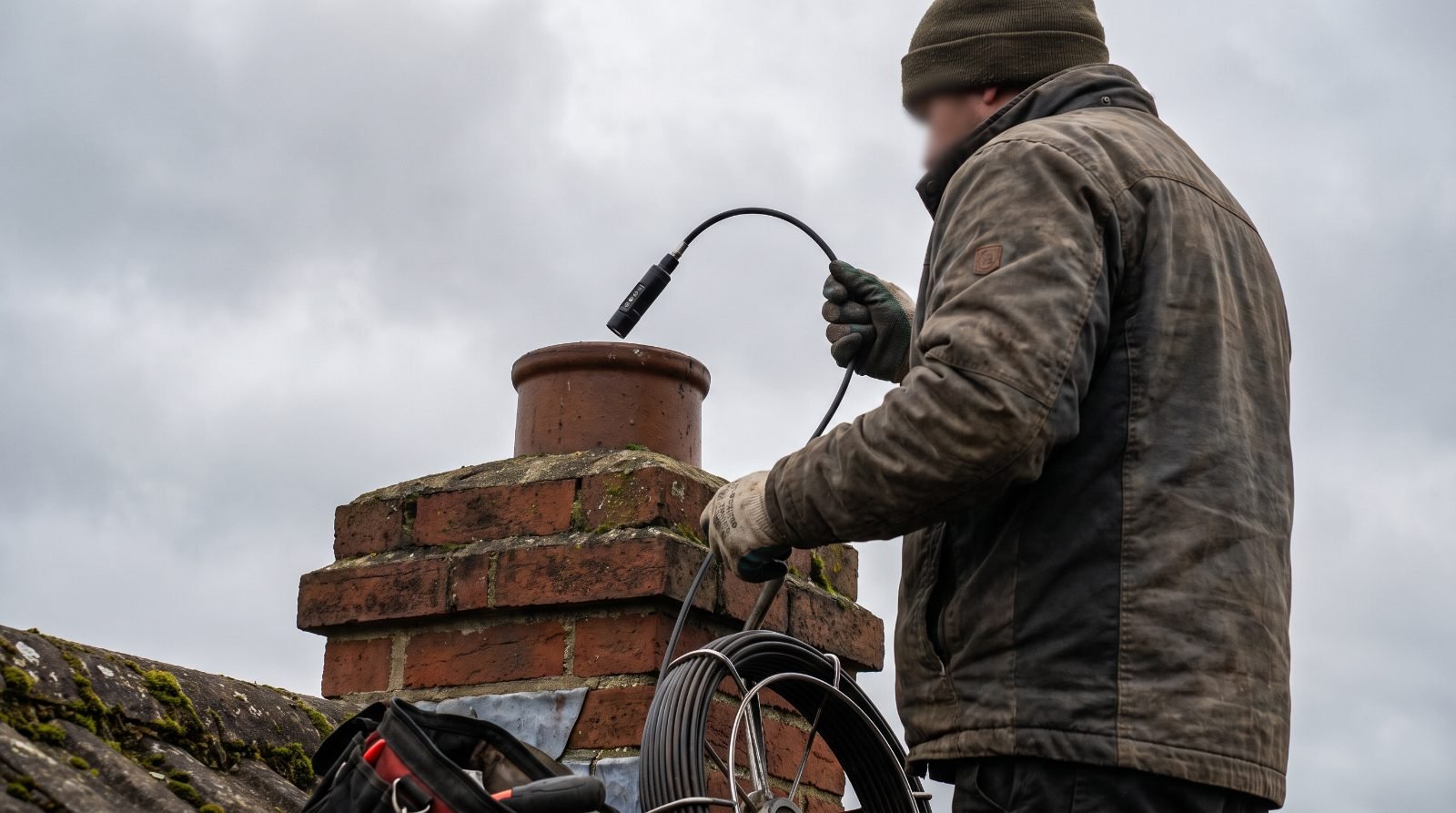
Crowns fail from above and the damage travels down, so a crown job frequently arrives with company: spalled brick in the top few courses, open mortar joints needing repointing, and a flue tile that has cracked from the water sitting against it. We photograph all of it and quote the pieces separately, so you can decide what happens now and what happens next year. A crown, a cap and repointing the top three courses done together is a common and sensible package — the labour and the staging are the same trip.
Signs the crown has gone
- Visible cracks across the top of the chimney (usually only findable from the roof or a drone)
- Chunks of concrete or mortar in the gutter or on the ground at the base
- Brick faces flaking, popping or crumbling in the top courses — spalling
- White chalky staining down the outside of the chimney
- Mortar joints that have receded or gone soft near the top
- Damp on the chimney breast inside an upstairs room or the attic, with no leak at the roof line
- The chimney looks visibly darker or wetter than the surrounding brick after rain, and stays that way
| Work | Typical range |
|---|---|
| Elastomeric crown coat over a sound crown | $350 – $700 |
| Crack repair and patching, then coat | $500 – $950 |
| Full crown removal and recast in reinforced concrete | $800 – $2,200 |
| Repointing the top three to five courses of brick | $600 – $1,600 |
| Rebuilding the chimney above the roofline | $1,500 – $4,500 |
| Water repellent applied to the stack (vapour-permeable siloxane) | $300 – $700 |
Planning estimates for the Pittsburgh market, not quotes. Access, height, the condition of the masonry underneath and whether staging is needed all move these numbers. Your price comes in writing after we have looked at your chimney.
Questions about chimney crown repair
Can I just seal it myself from a ladder?
Not from a ladder — the crown is at the very top of the chimney and you would have to be standing on the roof leaning over it. That is the fall that kills people. It is also the one repair where a bad job is genuinely worse than nothing: a hard, brittle sealer over a moving crack traps water underneath and accelerates the damage.
How do I know whether mine needs a coat or a recast?
Photographs. It is a judgment about how much of the slab is still doing its job, and it needs eyes on it. Broadly: hairline and narrow cracks in an otherwise flat, intact slab means coat; missing sections, deep cracks you can get a finger into, or a crown that has broken away from the flue tile means recast.
Should the brick get sealed too?
Often, but only with the right product. Masonry water repellent has to be vapour-permeable — a breathable siloxane that stops liquid water going in but lets vapour out. A film-forming acrylic sealer traps moisture inside the brick, and then freeze-thaw does its work on the inside where you cannot see it until the face pops off. This is a common and expensive mistake on old Pittsburgh brick.
What happens if I leave it another year?
Sometimes not much. Sometimes a winter turns a $600 crown coat into a $3,000 rebuild, because the water got into the top courses and froze. We will tell you which of those we think you are looking at, and we would rather say 'this can wait until spring' and be right than sell you an urgent job in November.
Related services
Chimney Crown Repair across the region
Not sure what's wrong with your chimney?
Most people call us because of a smell, a stain on the ceiling, or a home inspector's note they don't understand. Tell us what you're seeing and we'll tell you what it usually means — before anyone books anything.