Chimney services · Pittsburgh, PA
Chimney cleaning and sweeping
The maintenance job that stops the expensive ones from happening.
Burning wood produces creosote, creosote is flammable, and enough of it in a flue is what turns a normal fire into a chimney fire. That is the whole argument for sweeping, and it has not changed in two hundred years.
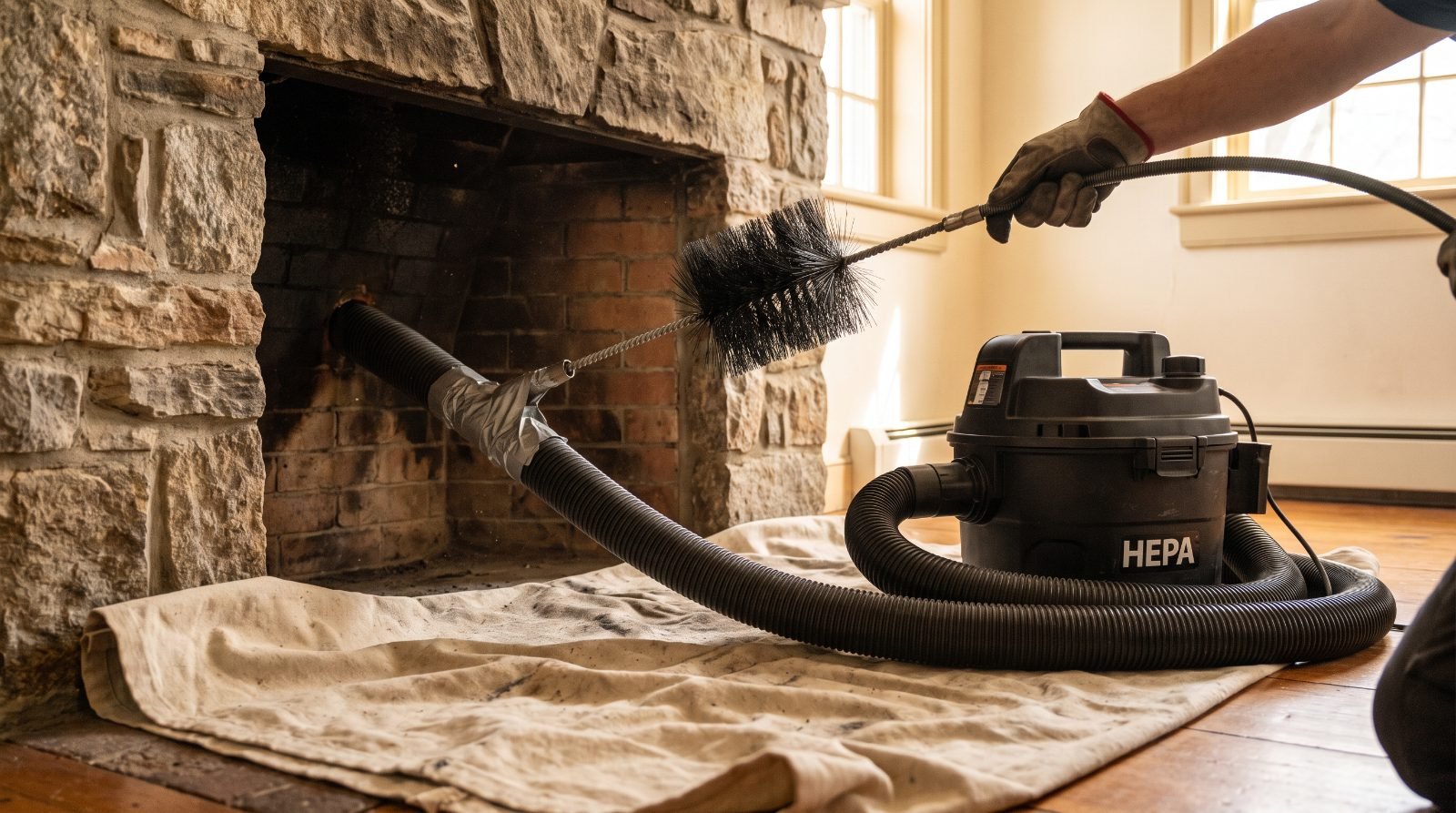
What has changed is the method. A modern sweep runs a HEPA vacuum at the firebox the entire time the brushes are moving, so the soot goes into the machine rather than into the room. Done properly you should not be able to tell afterwards that anyone was in the house.
The three stages of creosote, and why the third one costs more
Stage 1 is a light, flaky soot. It brushes off easily and this is what you want to be dealing with — it is the result of hot, well-drafted fires in seasoned wood.
Stage 2 is harder, more granular, tarry in places. Still removable with brushes and rotary tools, takes longer.
Stage 3 is glazed creosote: a hard, shiny, tar-like coating fused to the flue wall. Brushes will not touch it. It has to be broken down chemically or removed with rotary chain heads, it is highly flammable, and it is the single most common cause of serious chimney fires. It builds up from slow smouldering fires, unseasoned wood, and a stove damped down overnight — which is exactly how a lot of people in Westmoreland and Butler counties run a wood stove for real heat.
What the visit includes
- Drop cloths and boot covers before anything else happens
- HEPA vacuum containment at the firebox throughout
- Full flue sweep, top to bottom, brushed to bare liner
- Smoke chamber and smoke shelf cleaned — the part most often skipped, and where the heaviest deposits sit
- Firebox and damper cleaned and the damper checked for operation
- Ash removal
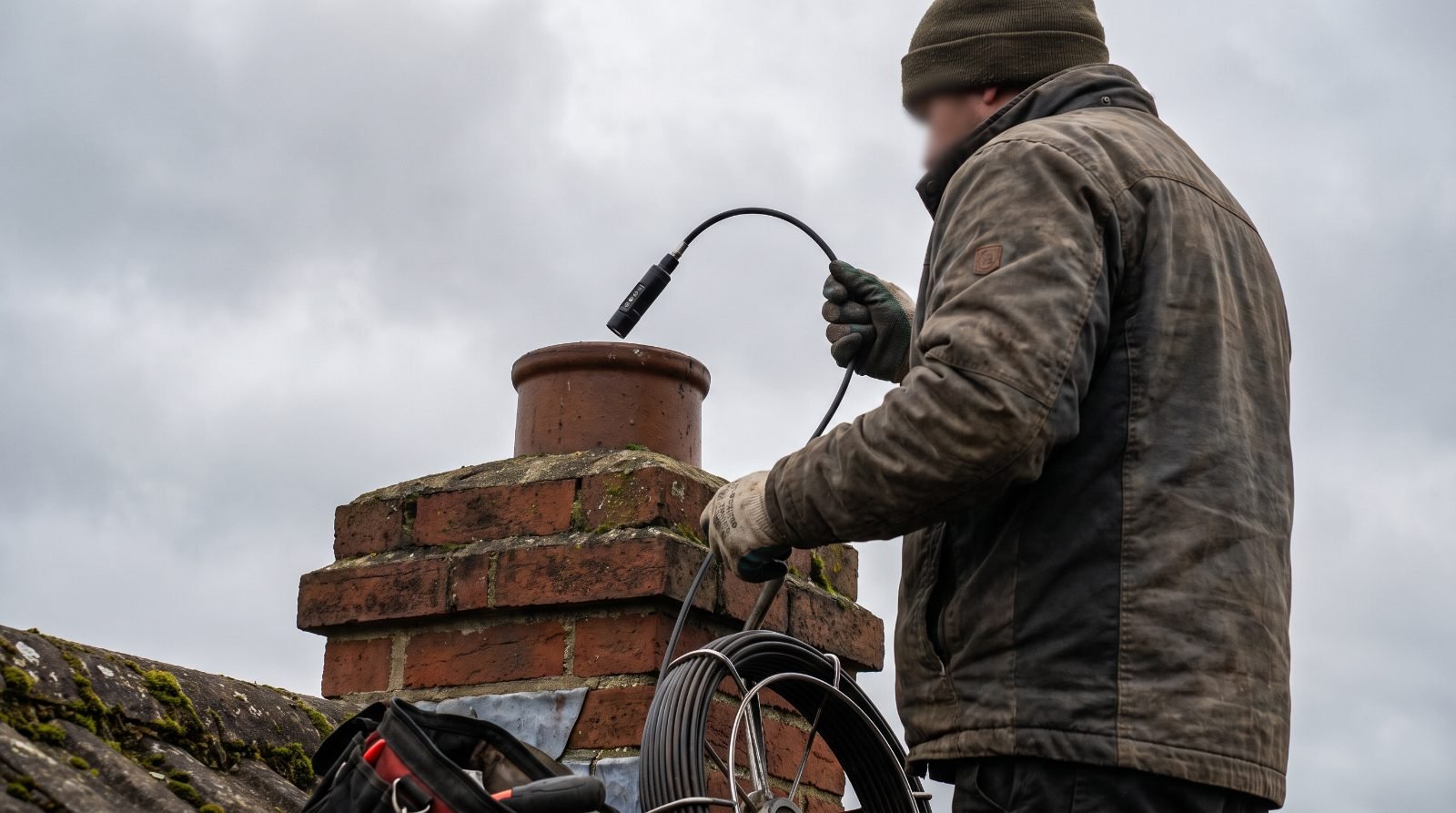
- A Level 1 visual inspection as part of the same visit
- Before and after photographs down the flue
How often, honestly
The industry answer is 'when creosote reaches one eighth of an inch,' which is accurate and useless if you cannot see your flue. In practice: an open fireplace used occasionally through winter, every two to three years. A fireplace used most weekends, annually. A wood-burning stove or insert used as a genuine heat source, annually without fail and sometimes at the midpoint of the season. A gas fireplace, no creosote at all — but the flue still needs an annual look, because gas exhaust brings its own problem and birds and animals do not care what you burn.
Signs it is overdue
- Smoke pushing back into the room when you light a fire
- A strong campfire or barbecue smell from the fireplace, worse in humid weather
- Black, oily-looking deposits visible on the damper or the top of the firebox
- Fires that will not catch or that burn sluggishly
- Dark staining on the wall above the fireplace opening
- Debris falling into the firebox
- You have moved into a house and have no idea when it was last done
| Work | Typical range |
|---|---|
| Standard fireplace sweep with Level 1 inspection | $175 – $300 |
| Wood stove or fireplace insert (has to be pulled to reach the flue) | $250 – $400 |
| Furnace or water heater flue | $150 – $275 |
| Second flue in the same chimney, same visit | $95 – $160 |
| Heavy stage 3 glazed creosote removal | $400 – $900 |
| Animal nest or debris removal from the flue | $150 – $400 |
Planning estimates for the Pittsburgh market, not quotes. Access, height, the condition of the masonry underneath and whether staging is needed all move these numbers. Your price comes in writing after we have looked at your chimney.
Questions about chimney cleaning
Will this make a mess?
It should not. The vacuum runs the whole time and the work area is covered before we open anything. If a house has an unusually awkward setup we will say so before we start rather than after.
There is a smell but we never use the fireplace. Why?
Usually creosote residue plus moisture, and it gets worse in humid summer weather when the air conditioning pulls air down the chimney instead of up it. A sweep removes the source. If the smell persists afterwards it is normally a draft problem — a top-sealing damper solves most of them.
Do gas fireplaces need sweeping?
Not for creosote, because gas does not produce it. They still need an annual inspection: gas exhaust is cool and wet, and in an oversized old flue it condenses and corrodes the liner from inside. We also find a surprising number of bird nests and debris blockages in gas flues, which is a carbon monoxide problem rather than a fire one.
Do you clean dryer vents too?
No — we stay on chimneys. It is a real fire hazard and worth having done, just not by us.
Related services
Chimney Cleaning across the region
Not sure what's wrong with your chimney?
Most people call us because of a smell, a stain on the ceiling, or a home inspector's note they don't understand. Tell us what you're seeing and we'll tell you what it usually means — before anyone books anything.