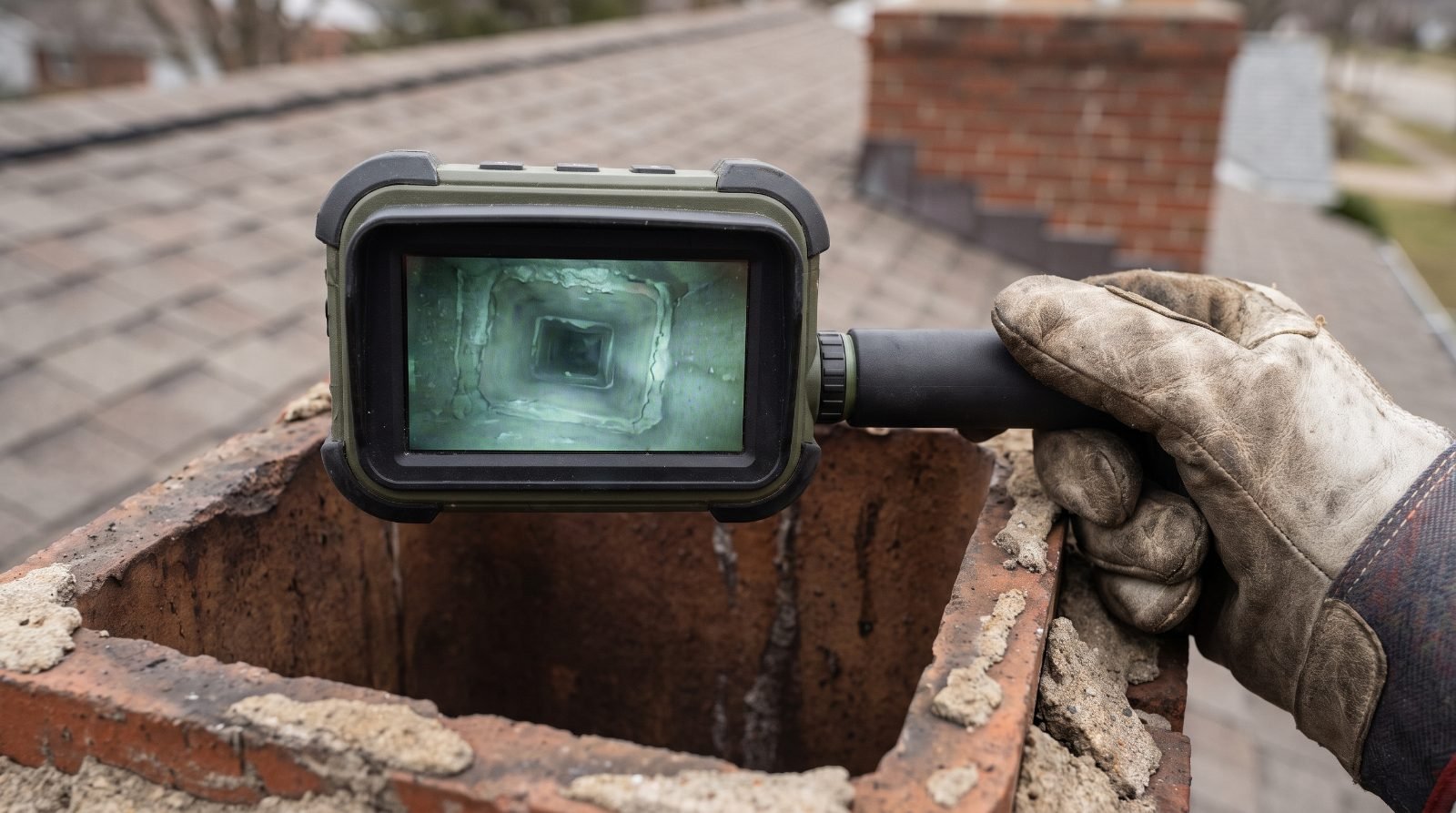
Chimney Inspection
A camera down the flue, a look at the roof and the firebox, and a written report with photographs of everything we find.
Learn more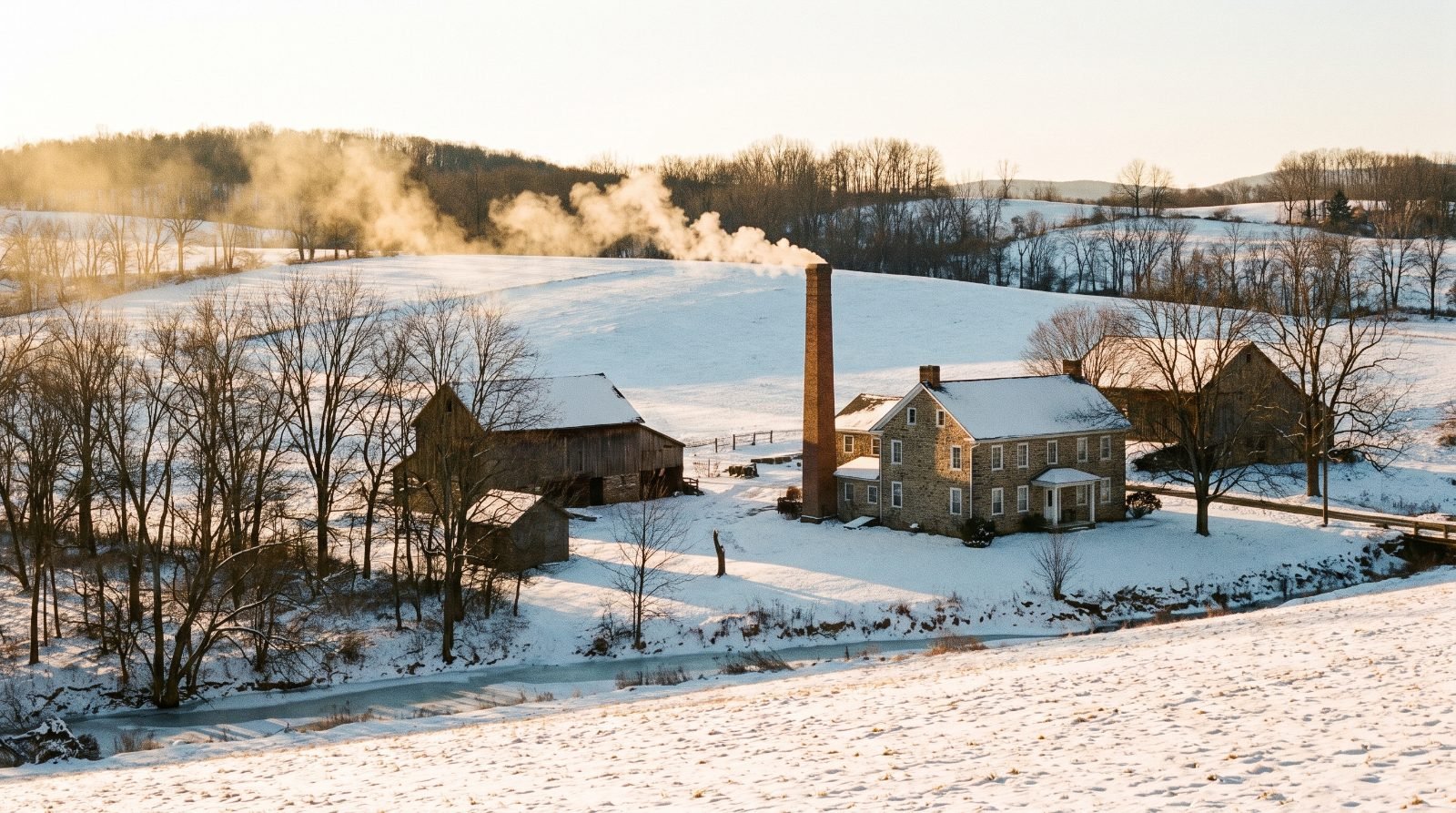
Service area
Where wood is real heat, not decoration — which means heavier creosote and a very different sweep schedule.
Westmoreland is the county where the chimney work changes character. Further out from the city, on larger lots and with more woodland, a wood stove or fireplace insert is frequently a genuine heat source rather than something lit at Christmas. People here burn through a winter, not through a weekend.
That single behavioural difference is the whole story. A stove damped down to hold heat overnight burns slow and cool, and slow cool burning is exactly what produces creosote fastest. We find more stage 3 glazed creosote in this county than in the rest of our service area combined, and the honest annual advice out here is different from what we tell someone in Shadyside with an open fireplace they use six times a year.
Glazed creosote is the hard, shiny, tar-like deposit that fuses to the flue wall. Brushes slide over it. It has to be broken down chemically over repeated applications or taken off with rotary chain heads, which is why it is priced separately from a normal sweep — it is a different job that takes hours rather than minutes. It is also the fuel for the chimney fires that damage flue tiles, and once a liner has been through one it usually needs replacing. The way to not pay for this is to burn hot, burn seasoned wood, and sweep every season. Seasoned matters: green or wet wood is the single biggest cause of heavy creosote, and 'it's been in the pile since spring' is not seasoned.
Out toward Ligonier, Derry, Mount Pleasant and the townships in between there is a lot of genuinely old housing — nineteenth-century farmhouses with stone or brick chimneys, often unlined, often with flues that have been reconfigured two or three times as appliances changed. These need a camera before anything else, because what the chimney is on the outside tells you very little about what has happened to it inside. Stone chimneys in particular can look magnificent and be structurally hollow behind the face.
This is more open country with less shelter than the city, and chimneys here take wind-driven rain on the exposed face all winter. West and north-west elevations are consistently the worst on any given stack. Combined with the higher ground in the eastern part of the county — Ligonier and the Laurel Highlands foothills get more snow and hold it longer than the city does — the freeze-thaw load on masonry out here is heavier. It shows up as crown cracking and mortar joint erosion on one side of a chimney while the other three sides look fine.
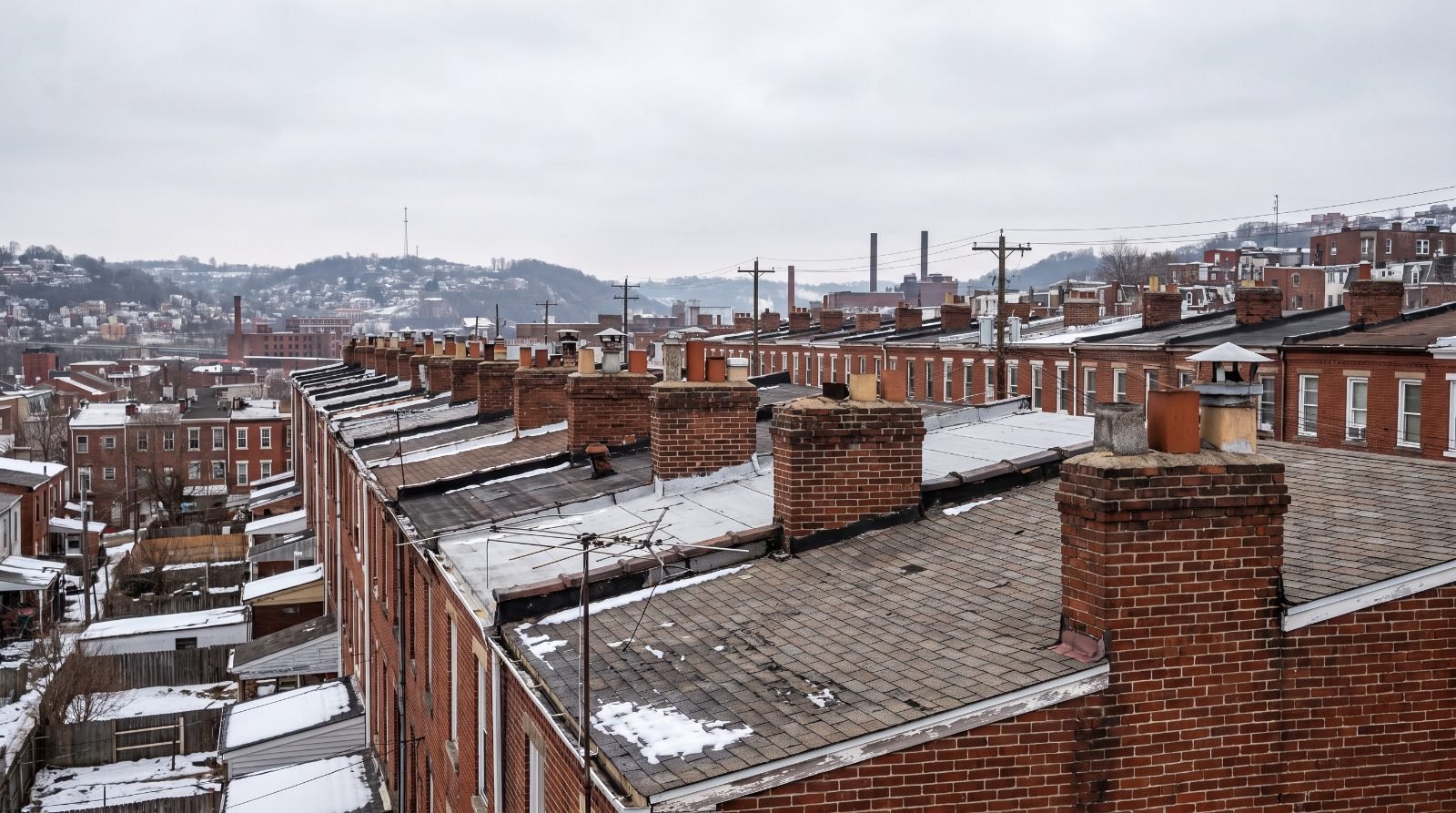
Long driveways, well and septic, and houses set well back. None of it is a problem, but it does mean we ask about access when booking — a truck that cannot get within a hundred feet of the house changes how equipment gets to the roof. Greensburg, Jeannette, New Kensington and Latrobe are conventional town-scale jobs; the townships sometimes are not.
Not on the list? If you are within about 45 minutes of the city we almost certainly cover you — call and ask.
A camera down the flue, a look at the roof and the firebox, and a written report with photographs of everything we find.
Learn more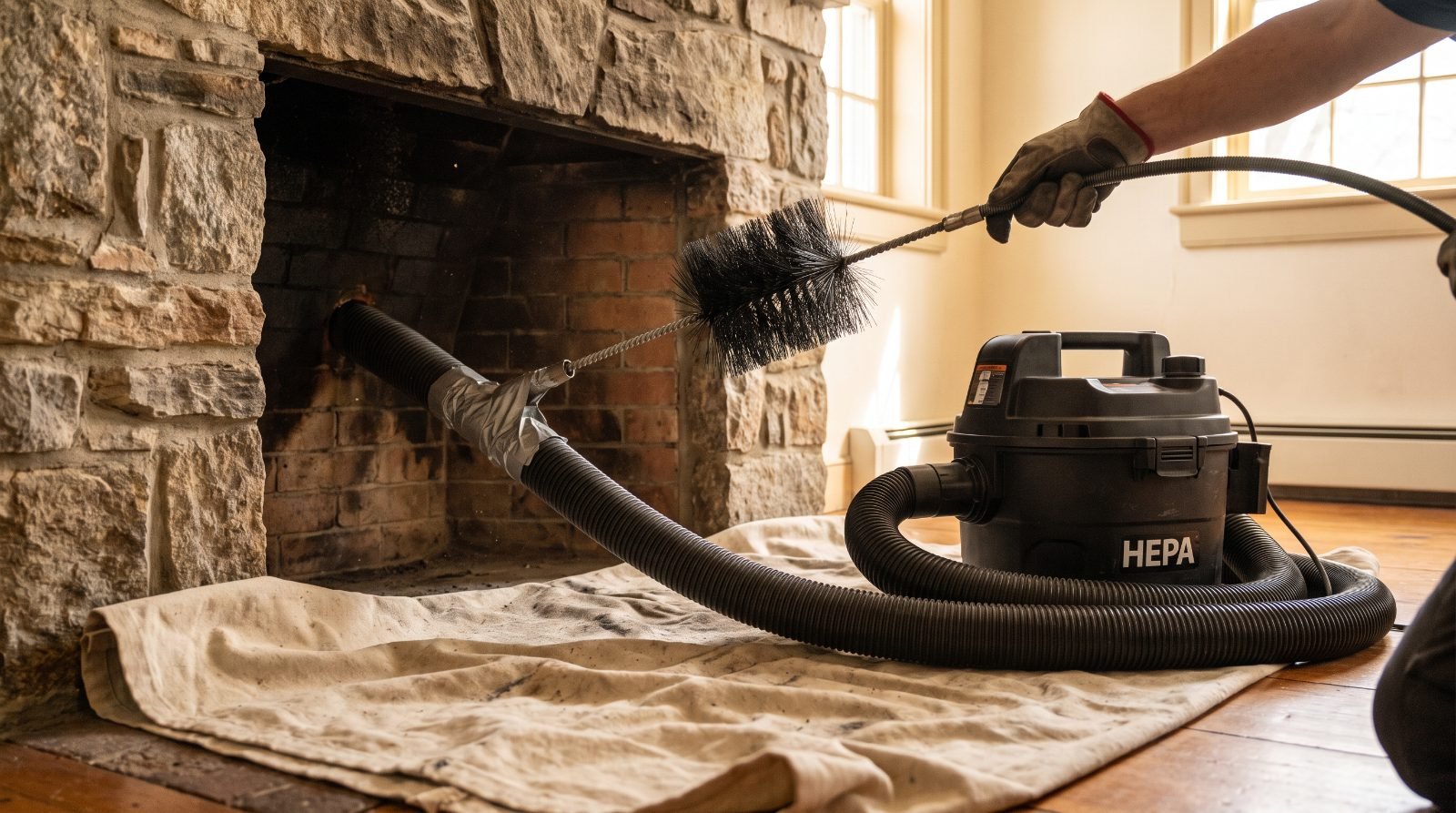
Creosote and soot out, with vacuum containment so nothing ends up on your floor. Before and after photographs of the flue.
Learn more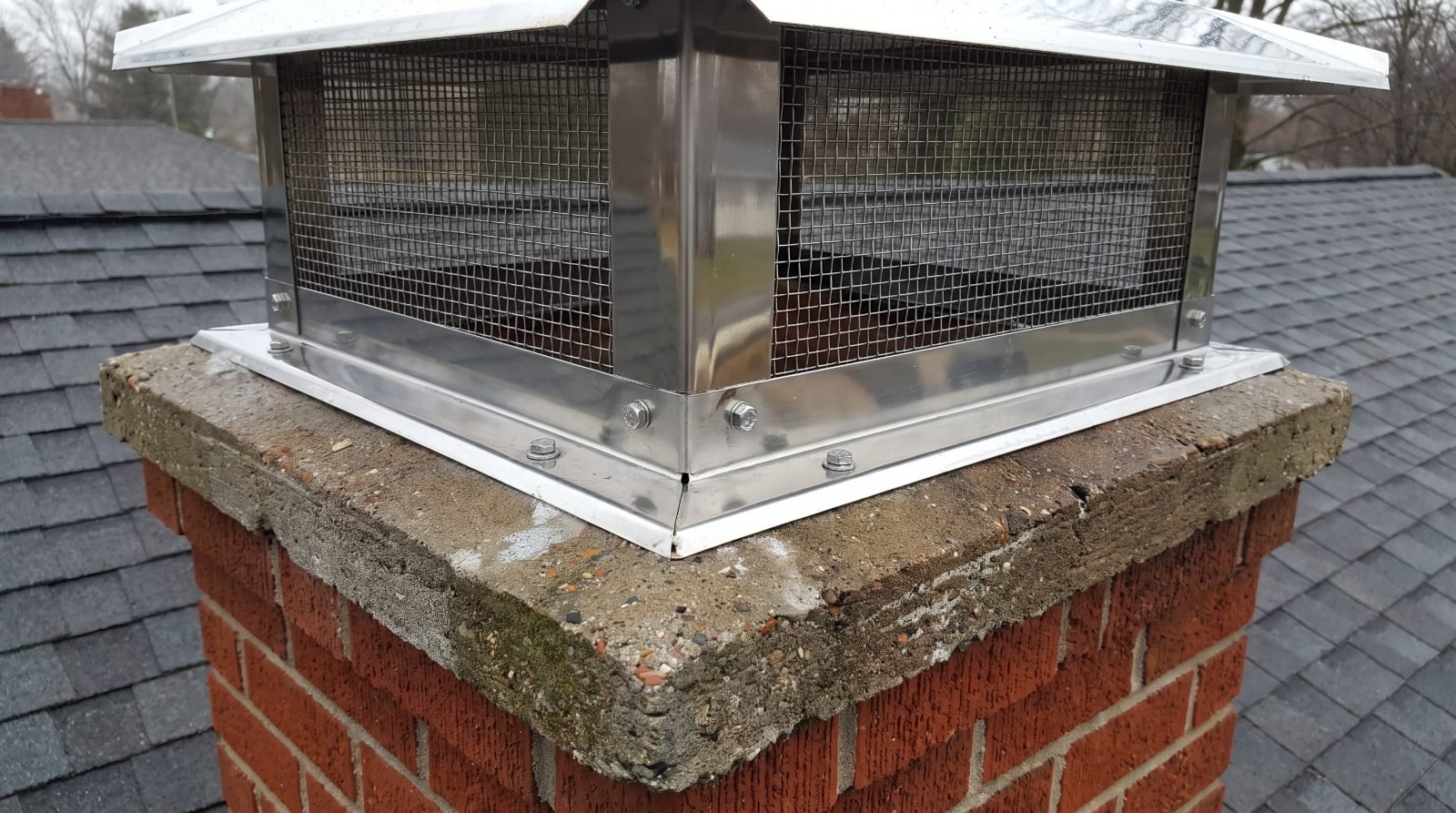
Stainless caps and custom multi-flue covers that keep rain, snow, birds and squirrels out of an open flue.
Learn more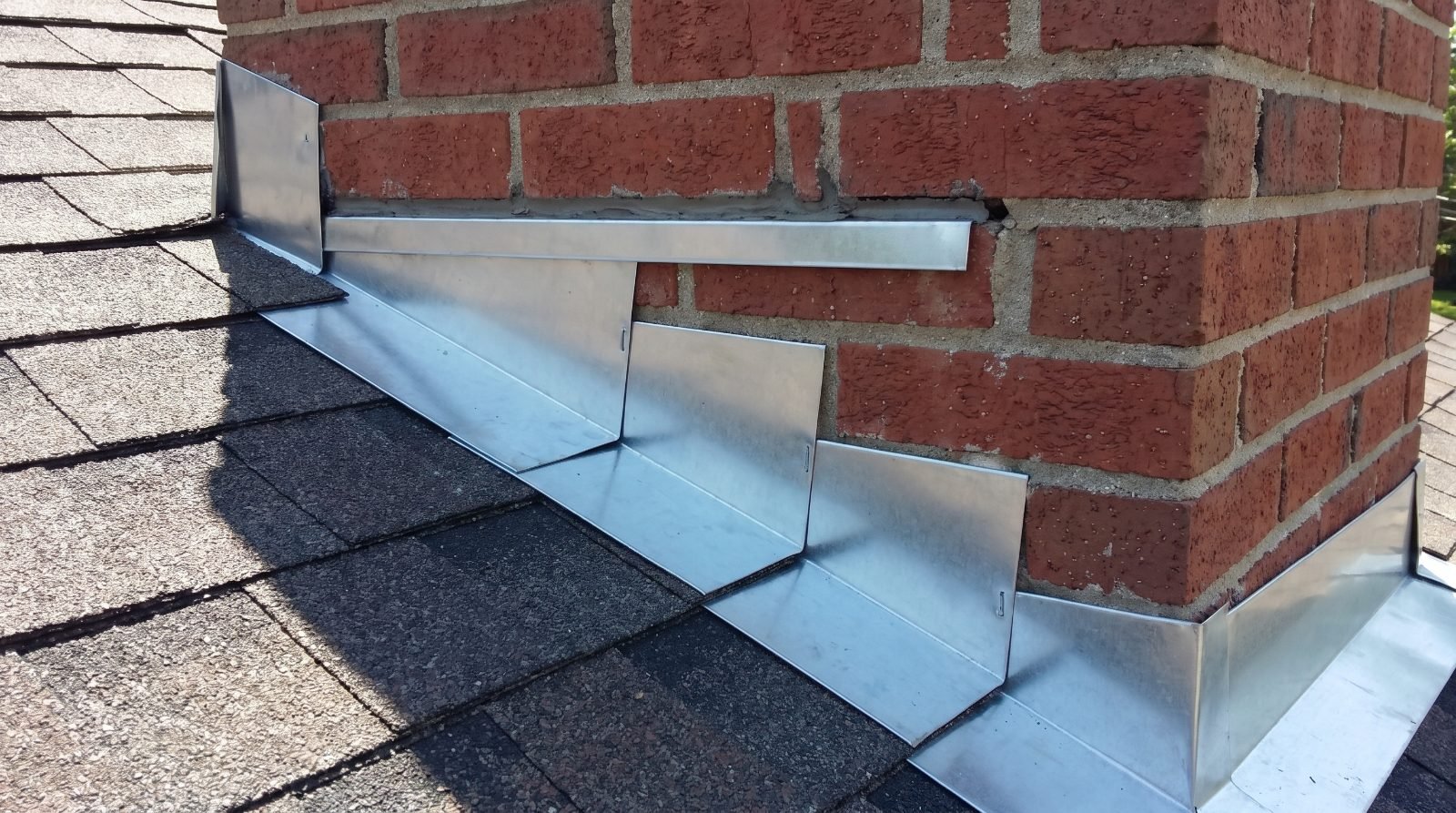
Stopping leaks where the chimney passes through the roof — with metal cut into the mortar joint, the way it is supposed to be done.
Learn more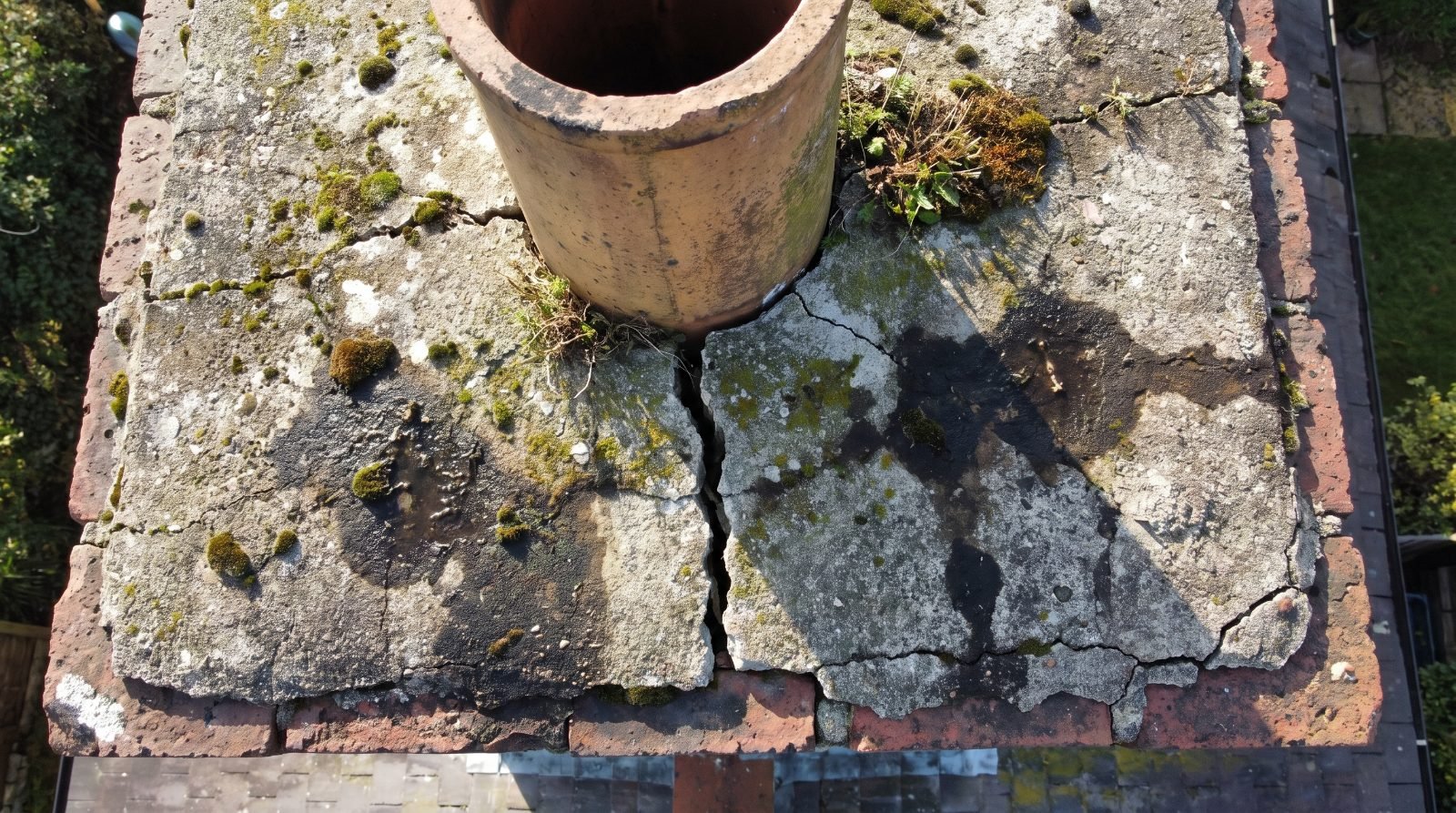
Repairing and recasting the concrete slab at the top of the chimney — the part that keeps water out of the masonry below it.
Learn moreOnce a season minimum, before the season starts, and it is worth having it checked again at the midpoint if you are burning daily. If you are burning anything other than well-seasoned hardwood, or damping the stove down overnight regularly, assume mid-season.
Often people have had one without realising. The signs are flakes of black, puffy, honeycombed material on the roof or in the yard, warped or discoloured damper or metalwork, cracked or shifted flue tiles, and a roaring sound during a fire that people describe afterwards as sounding like a train. If any of that sounds familiar, get a Level 2 before the next fire — the liner may be compromised.
It can be, and that is the point people miss. Many chimney fires are slow and never leave the flue, but they can crack the clay liner. A cracked liner means the next fire has a path to the framing behind the masonry, and that is the one that reaches the house.
Most people call us because of a smell, a stain on the ceiling, or a home inspector's note they don't understand. Tell us what you're seeing and we'll tell you what it usually means — before anyone books anything.