Chimney services · Pittsburgh, PA
Chimney cap installation
The cheapest repair on this site, and the one that prevents the most expensive ones.
An uncapped flue is an open pipe pointing at the sky. Every inch of rain that falls on this region goes straight down it, along with snow, leaves, and whatever decides to nest in there.
That water does not just sit in the firebox. It soaks the clay liner, works into the mortar joints, and then freezes — and a flue that freezes with water in the joints comes apart from the inside over a few winters. Capping a chimney is a few hundred dollars. Relining one afterwards is thousands. This is the single best-value job we do.
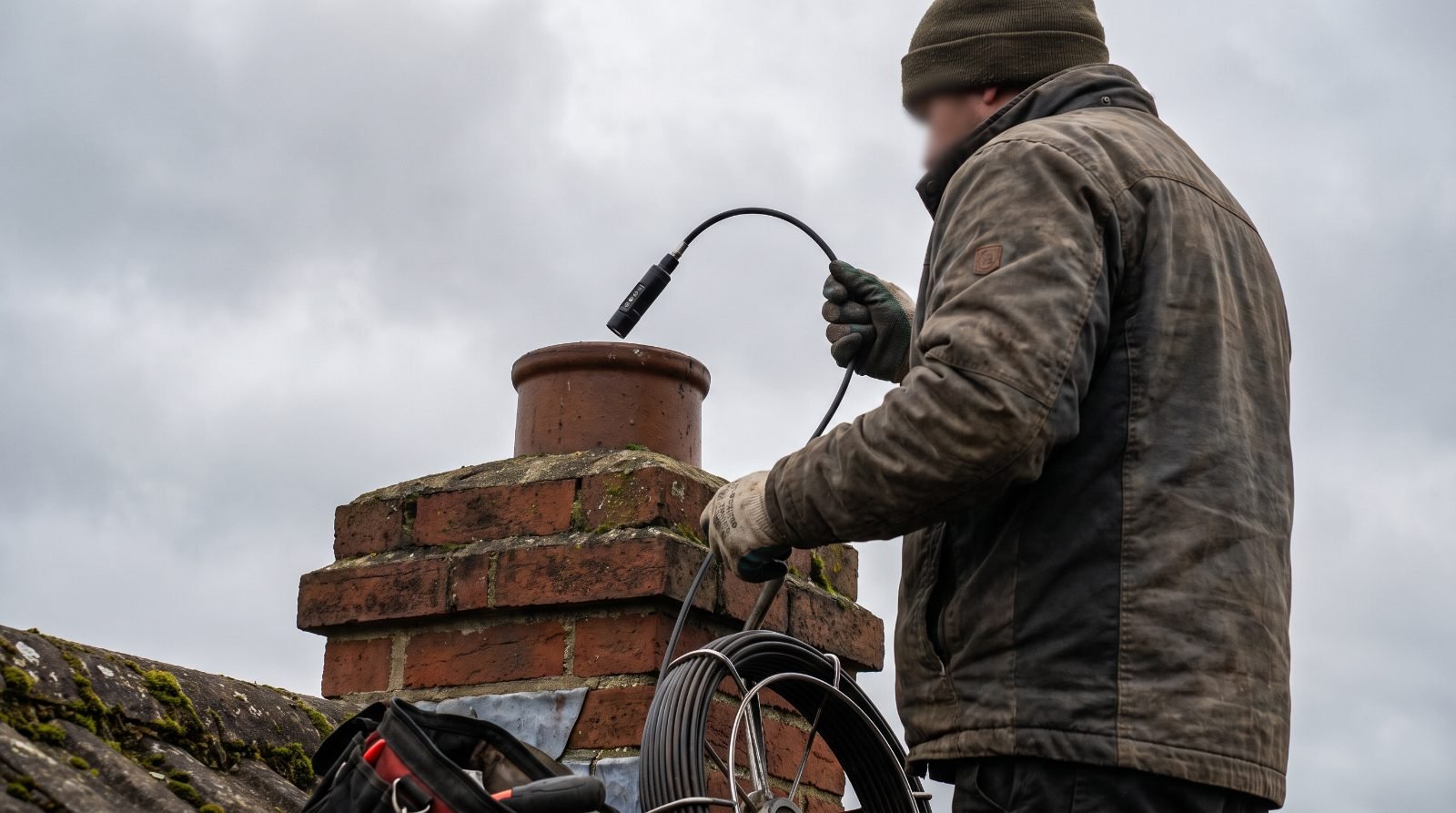
What a cap actually stops
- Rain and snow going directly down the flue and into the masonry
- Animals. Squirrels, raccoons and starlings nest in open flues, and a nest is both a blockage and a carbon monoxide risk when the furnace shares the stack
- Downdraft. A capped flue with the right hood is far less prone to blowing smoke back into the room on a windy day
- Embers on the roof. The spark arrestor mesh matters on any house with a wood roof, and on any house near trees
- Debris. Leaves and twigs, which in autumn is most of what we pull out of uncapped flues
The types, and which one you have
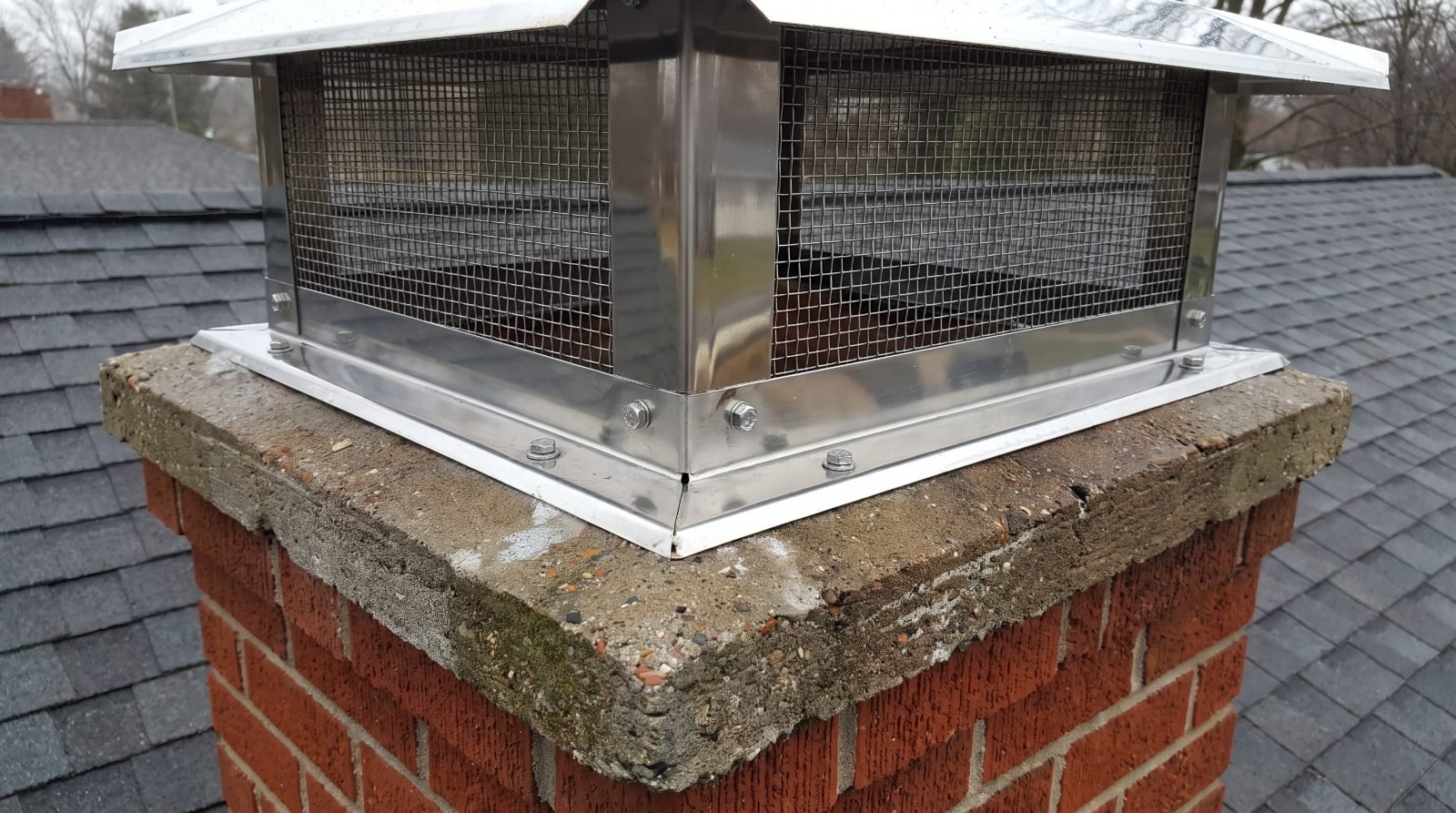
Single-flue cap. Clamps or bolts to one protruding flue tile. Straightforward, and the most common job. Stainless steel, not galvanised — galvanised caps rust through in about five to eight years in this climate and you pay twice.
Multi-flue cap. One custom-fabricated stainless cover spanning the whole crown on a stack with two or more flues. Measured on site and made to fit. Common on older Pittsburgh homes where fireplace, furnace and an abandoned coal flue all share one chimney.
Chase cover. Not a masonry chimney at all — this is the flat metal lid on top of a framed chase, which is what almost every house built after about 1990 has. The original covers are typically galvanised steel, they hold standing water, and they rust through around the fifteen-to-twenty-year mark. That rusted cover is the number one source of leaks in newer homes in Cranberry, Peters Township and the rest of the post-1990 suburbs. The replacement is stainless with a cross-break so water drains.
A note on chimney swifts
Chimney swifts nest in open masonry chimneys through the summer and they are protected under the Migratory Bird Treaty Act — capping a chimney with an active nest in it is both illegal and, if the birds are trapped, unpleasant for everyone. If we find swifts we will tell you, and we will come back and cap it after they have fledged in late summer. It is a delay of a few weeks, not a problem.
You probably need one if
- You can see daylight straight down the flue from the firebox
- Rain drips into the firebox, or there is standing water in it
- You hear scratching, chirping or fluttering in the chimney
- There is a rust stain running down the outside of the chimney or the siding beneath it
- The existing cap is rusted, bent, or missing its mesh
- Smoke blows back into the room on windy days
- The house is post-1990 with a framed chase and nobody has looked at the cover
| Work | Typical range |
|---|---|
| Stainless single-flue cap, supplied and fitted | $250 – $500 |
| Custom multi-flue stainless cap (fabricated to measure) | $600 – $1,400 |
| Stainless chase cover replacement | $500 – $1,200 |
| Top-sealing damper cap (seals the flue when not in use) | $450 – $850 |
| Animal removal and nest clear-out before capping | $150 – $400 |
| Cap fitted during another visit (sweep or inspection) | labour usually reduced by $75 – $150 |
Planning estimates for the Pittsburgh market, not quotes. Access, height, the condition of the masonry underneath and whether staging is needed all move these numbers. Your price comes in writing after we have looked at your chimney.
Questions about chimney cap installation
Can I just buy a cap at the hardware store and put it on myself?
You can, and people do. Two things go wrong: the cheap ones are galvanised and will rust out inside a decade, and fitting it means being on a roof at the highest point of the house. Every winter somebody in this region falls doing exactly this. If you are comfortable up there and you buy stainless, it is a legitimate DIY job on a simple single-flue chimney.
Will a cap make my fireplace draft worse?
A correctly sized one will not — and on a windy site it usually improves the draft, because the hood breaks up the crosswind that was pushing down the flue. An undersized cap or one clogged with creosote can restrict it, which is a reason to have the mesh cleaned at the annual sweep.
How long does a stainless cap last?
Properly fitted 304 stainless, decades — most come with a lifetime warranty against rust-through. That is the whole reason not to buy galvanised.
Something is living in my chimney right now. What do I do?
Do not light a fire, and do not open the damper to look. Call us. If it is swifts we wait for them to leave. If it is a squirrel or a raccoon, that is a removal job first and a cap second — and the cap is what stops the next one moving in.
Related services
Chimney Cap Installation across the region
Not sure what's wrong with your chimney?
Most people call us because of a smell, a stain on the ceiling, or a home inspector's note they don't understand. Tell us what you're seeing and we'll tell you what it usually means — before anyone books anything.