Chimney services · Pittsburgh, PA
Chimney flashing repair
If there is a stain on the ceiling near the chimney, this is usually the reason.
Flashing is the metal that seals the joint between a rigid masonry chimney and a roof that moves. Those two things expand, contract and settle at different rates, which is why this joint is the most common leak point on any roof and why it cannot be sealed with a tube of caulk.
It gets sealed with caulk constantly anyway, because caulk is fast and looks like a repair. It lasts two or three seasons in this climate and then the leak comes back worse, because by then water has been getting into the roof deck the whole time.
How it is supposed to be built
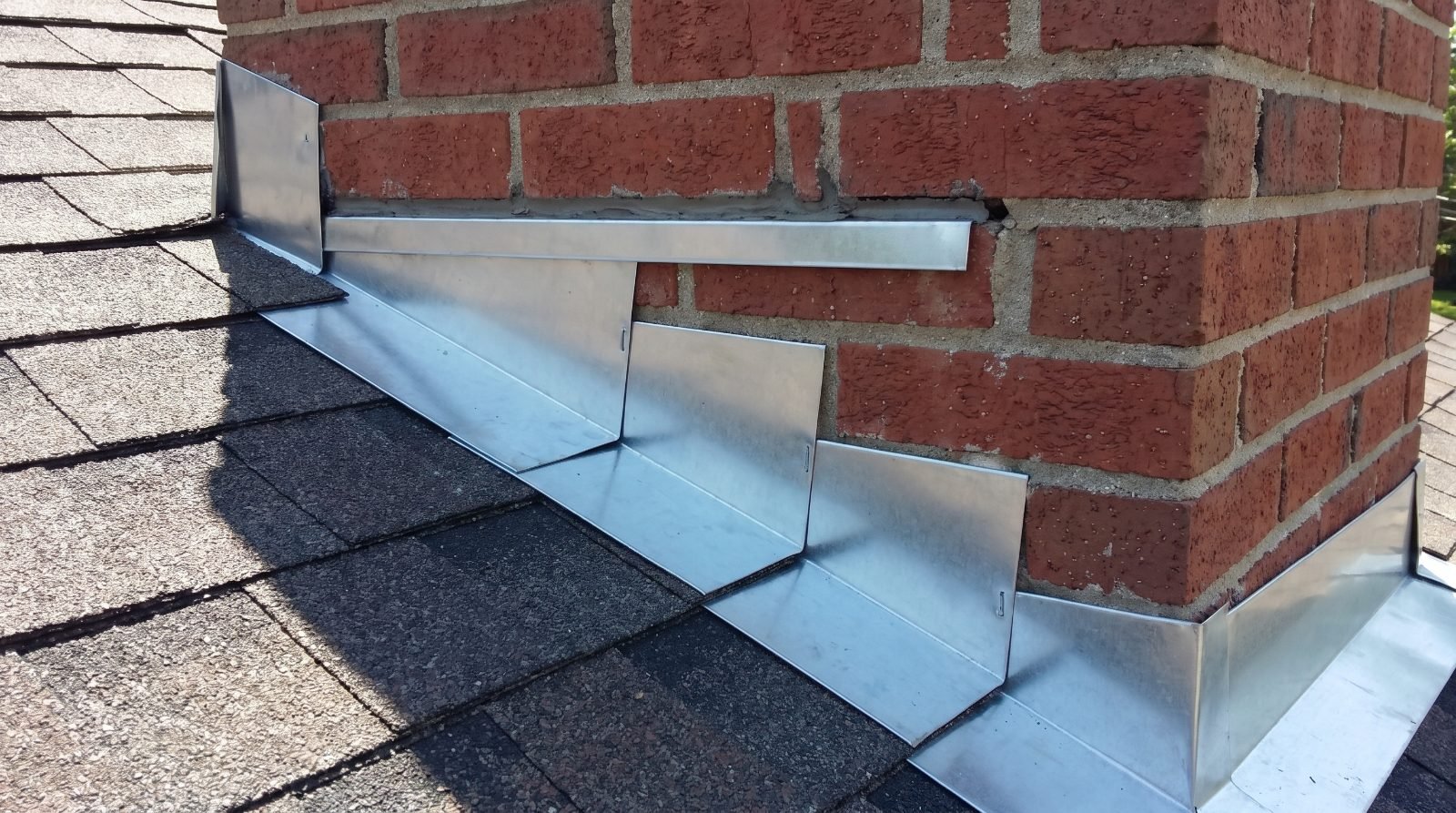
Step flashing — individual L-shaped pieces of metal woven into each course of shingles running up the side of the chimney, so each piece laps over the one below.
Counter flashing — a second layer, cut or ground into a mortar joint in the brick, folded down over the step flashing and sealed into the joint. This is the part that gets skipped. Counter flashing surface-mounted to the face of the brick with sealant is not counter flashing, it is a caulk joint with a piece of metal on it.
A cricket — a small peaked structure built on the up-slope side of a wide chimney to divert water around it instead of letting it pond against the masonry. Code calls for one on chimneys wider than thirty inches across the slope, and a great many older houses here do not have one. On a wide chimney with no cricket, snow packs against the up-slope face all winter and sits there melting into the joint.
What we do about it
- Pull the failed flashing and the shingles around it rather than covering it over
- New step flashing woven into the shingle courses
- New counter flashing cut into a ground mortar joint and sealed with polyurethane, not silicone
- Repoint the joint where the metal enters
- Build a cricket where the chimney is wide enough to need one
- Check the roof deck underneath for rot while it is open — if there is rot, you get told and shown before it gets covered back up
Ice dams, which are the other half of this problem
This region gets the freeze-melt-refreeze pattern that builds ice dams, and a chimney is a natural dam anchor: the up-slope side of the stack catches drifted snow, meltwater backs up behind it, and then that standing water gets pushed up under the shingles and over the top of the flashing, where no flashing can help. If a leak only appears in winter thaws and never in summer rain, the flashing may be fine and the problem is ice. Fixing that is about attic insulation and ventilation, and we will tell you if that is what we think is happening rather than selling you flashing that will not solve it.
Signs the flashing has failed
- A water stain on the ceiling or wall next to the chimney breast, usually a foot or two out from it
- Damp or a musty smell in the attic near where the chimney passes through
- Rust streaks or lifted, curled metal visible at the roof line
- Visible tar or thick caulk smeared around the chimney base — someone's previous patch
- White chalky residue (efflorescence) on the chimney brick inside the attic
- Peeling paint or crumbling plaster on the chimney breast in an upstairs room
- Water only appears when it rains hard from one particular direction
| Work | Typical range |
|---|---|
| Assessment and leak diagnosis (credited against the repair) | $125 – $250 |
| Spot repair to a limited section of existing flashing | $300 – $650 |
| Full re-flash — new step and counter flashing, asphalt shingle roof | $900 – $1,800 |
| Full re-flash on slate or tile roof | $1,500 – $3,200 |
| Building a cricket on a wide chimney | $600 – $1,500 |
| Roof deck repair where rot is found | quoted once opened up |
Planning estimates for the Pittsburgh market, not quotes. Access, height, the condition of the masonry underneath and whether staging is needed all move these numbers. Your price comes in writing after we have looked at your chimney.
Questions about chimney flashing repair
My roofer says it is the chimney and the chimney company says it is the roof. Who is right?
It is a fair question and the reason it happens is that the flashing sits exactly on the boundary between two trades. We do this joint specifically — masonry side and roofing side — so there is nobody to point at. If it genuinely turns out to be a roof problem away from the chimney we will tell you that and not charge you for flashing you did not need.
Can it be repaired without touching the roof shingles?
Sometimes, if the step flashing is sound and only the counter flashing has pulled out of the joint. Often not, because step flashing is interleaved with the shingles and cannot be replaced without lifting them. Anyone promising a full re-flash with no shingle work is describing a caulk job.
Slate roof — can you work on it?
Yes, and slate needs saying out loud because there is a lot of it on pre-war houses in Pittsburgh and it is unforgiving. Slate cracks under a boot in the wrong place and cracked slate is another leak. It takes staging and hooks rather than a ladder, which is why the price is higher.
How long should new flashing last?
Properly installed copper or heavy-gauge aluminium with counter flashing cut into the joint should outlast the shingles around it — twenty years and up. A caulk repair should be treated as buying time until the real fix, and it is worth being honest with yourself about which one you are paying for.
Related services
Chimney Flashing Repair across the region
Not sure what's wrong with your chimney?
Most people call us because of a smell, a stain on the ceiling, or a home inspector's note they don't understand. Tell us what you're seeing and we'll tell you what it usually means — before anyone books anything.